
Why Nicole Kidman Would Love This Episode (Plus Seals, Sphynx Cats & Poop Mysteries!)


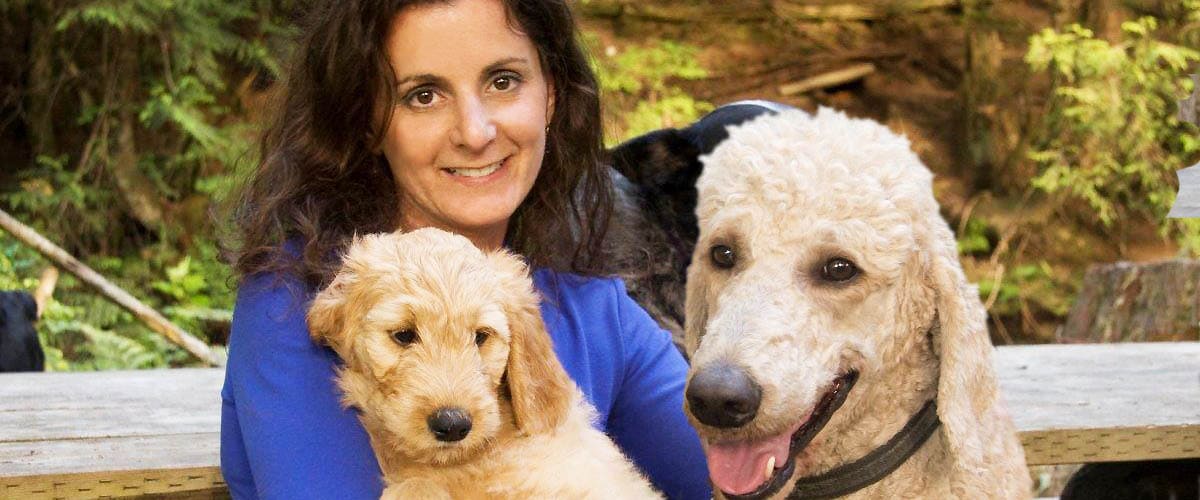
The celeb trivia question today is Why will Nicole Kidman love today's show? Deb explains the connection between dogs and Seals, the 'dogs of the sea'. Karma gets some burglars in England when llamas rally. A listener comments on a deb wolfe- pet expert Facebook posted photo of Fabio the fancy white poodle, after a fresh roll in bear poop!
For pet laughs and great social media posts see Deb Wolfe-Pet Expert on Facebook at https://www.facebook.com/debwolfepetexpert/ .
"Why does my dog always poop at the start of the park and make a big show of it?" Deb explains 2 very good reasons. Have you wondered about hairless cats and their personalities and care? Deb Wolfe gives you the history, facts, and owner testimonials on the North American hairless sphynx cat. A very unusual cat! For training demos on cats (& dogs) check out Deb Wolfe – Pet expert on YouTube at https://www.youtube.com/channel/UCKv0UI45qaZQAV2IS5cUuhQ .
Please subscribe and tell Deb what you'd like to see her demo with dogs and cats on DebWolfe.Pet Expert on youtube. You ask and she'll deliver.
Listen to Episode #262 Now:
Transcript:
Hello, you're listening to Animal Party on Pet Life Radio, and I want to take us into the ocean today, into the lakes and the oceans and the seas to talk about a few things. But before I get there, I know there's some trouble in the world and they keep talking about gas prices, but they are also talking about fertilizer. I don't know if you've heard this, but apparently fertilizer prices are going to jump, jump, jump.
And it's spring over here in North America. So it's the time for fertilizing all our plants and gardens and crops, and maybe you don't know these things, but I know lots of ways to make fertilizer without spending a dime. So today's teaser question, riddle of the day, is what is free and found everywhere and can keep pests and cats, some insects, all the unwanted out of your garden.
And also act as a slow acting nitrogen source. What do you think that is? What could you be collecting and using in your garden the way I'm using it in mine? Okay. That's our riddle today.
And when I solve it, I'm going to give you an extra bonus tip for your garden that isn't in the riddle, but it's pet related. So I'm going to give it to you anyway. So that'll be later in the show.
And I did say we're going to go under the sea, but before we go under the sea, I want to talk about something going on in the UK, which I think is so, it's bizarre and it's great, and it's just, it caught me off guard completely, even though it's been going on for a few years now, I was really surprised. So here's the deal. They banned hunting foxes with dogs in the UK.
They banned a lot of things there. They're really up on their animal cruelty laws. So they banned it there and about 20 years ago.
So no hunting with foxes, you're not allowed. And for a while, people started doing this thing called rag soaked. So they'd sent a rag and drag it through the forest and then have the foxes hunt the rag.
But, um, that's about to be banned as well. So, so what are people doing? These people who love to ride and love to hunt with their hounds, basically, bloodhounds and probably some beagles and Jack Russell's in the mix. Anyway, so what they're doing is their prey now is humans.
Yes, human volunteers. This is so cool. So it's called the new forest bloodhound group.
And what they do is they get people who volunteer to do this to wear these little pennies and they go out in the forest and they go, go and they, you know, run as a group somewhere all through the meadows and the moors and the swamps in the forest and over as someone, there's a very British way of describing it. So I quoted it. Someone said, we track scent over heather, bracken, grassland and woodland.
Okay. And, uh, so, so basically, and then the animals are released. There's five rounds of it.
The whole thing is 16 kilometers. And each time the riders are given treats, like again, very British, sausages and whiskey. And the, they release the people and then the horses and hounds go after them.
And in one case, so there's five rounds. And in one of the cases, the, the horses arrived, but the hounds did not. Now I wanted to comment on that because some people don't realize horses are very smart and horses, if they've used in this event, if they've been used in this event many times, or even if one of them has been used in the event many times, the other horses are very sensitive to communication with each other, so they will follow the leader very much so, and the one who thinks he knows what's going on is going to try and track the humans once he figures out this is the deal.
They've got very sensitive noses, very sensitive hearing. They will find the human too. So it's interesting to me that in one of these trials, the dogs didn't find them and the horses did.
So that's our note from England today. Oh, I'm so happy about that. I just love that story.
Okay. We're going to go to break. And then we're going to talk about cuttlefish and lobsters.
Stay tuned on Animal Party on Pet Life Radio. Hello, you're back on Animal Party Pet Life Radio, and there's been something new they're talking about. There's a lot of places like Sweden, and it's about to happen in England again.
And a lot of European countries have banned the boiling of lobster and saying it's cruel. Now they haven't actually said how you're supposed to kill lobster and eat lobster. There is a method.
Some people say you take a knife and you just stab it right through so it kills it instantly. Other people bash it like a fish, but they're saying that putting them in the boiling water and letting them die that way is very, very cruel. So at first I thought, really, is that really something? Is that really a thing? But then I watched a video of it and they were able to measure pain and responses, and it sure did look cruel from that viewpoint, especially since there's still a way to eat them.
You don't have to not eat them. You just have to figure this out. Now, unfortunately for the Maritimes in Canada, sales of lobster to Europe have really gone down since this ruling, and so people don't know how to kill them, so they don't want to order them, but there are humane ways.
All right. So a cuttlefish. So people are kind of debating the intelligence of the lobster and whether it feels pain or not.
And the lobster is closely related to insects, which they've done a lot of studies on. And they have found that they exhibit similar characteristics to mammals and others in terms of pain aversion. So there's a lot of theories behind it and science behind it.
But cuttlefish, which are supposed to be solitary and likely, we thought uncommunicative, are actually surprising scientists all the time. So cuttlefish are being studied, and one of the things that's really interesting is that they pass the marshmallow test. Do you know what the marshmallow test is? Okay, I'll go over the marshmallow test.
Anybody with a toddler probably knows what the marshmallow test is. You take a marshmallow and you put one in front of the kid, and then you put a couple and you say to him, if you eat it right now, you can have this marshmallow, but if you wait 15 minutes, you can have three marshmallows or two marshmallows, something better, right? And it just tells you kind of about the nature of the child, if they're willing to wait for the larger reward or if they want the immediate gratification. It's a very interesting test.
So we do that on kids. Well, they've also done it on dogs, apes, primates, chimps, parrots. So in the case of chimps, they'll wait.
They can have one grape right away, or they could wait two minutes for four extra grapes. And they always wait two minutes for four extra grapes. Okay, so this is the test that they're doing.
So they do it on the cuttlefish, and it was really hard to teach them. They had to teach them all kinds of things before they could test them. But they did it.
They did it in several steps, and just the teaching of it kind of illustrates their intelligence. But they're a weird fish. They have three hearts, they have a beak like a parrot, and they can change color in a second to camouflage and show their mood.
So this is the cuttlefish, and they pass the marshmallow test. They will wait. If given a choice of prey that's dead, which they don't love, or prey that's alive, which they love, they will wait for the prey that's alive.
And even when the prey that's dead, the box containing it is open, they won't take it, they'll hold off from taking it, and wait, because they learned, they taught them that if they take it, all rewards get taken away. So it's so fascinating to see how they did this and how it works. So that's kind of made me rethink everything about fish, and insects, and lobsters, and invertebrates in general, because if they can think like that, and they can hold off, it's just amazing, it's just amazing.
They taught these cuttlefish, these symbols, able to read a circle and a triangle, so that the circle would mean fast, and the triangle would mean longer wait, and they were able to learn that. These fish were able to learn that. I'm just blown away by that.
All right, we're going to go to break and come back. And I guess we should talk about dogs and cats. Stay tuned on Animal Party Pet Life Radio.
Hello, you're back on Animal Party Pet Life Radio, and I said I'd talk about dogs, so I'm going to talk about dogs, but I'm kind of going to be sneaky about it. I'm going to talk about the ocean still. Well, not exactly the ocean, the lakes.
So what's happening in the lakes? Canada has more lakes than the rest of the world combined. So it's very interesting to us to keep our little lakes safe, and the great lakes have been invaded with mussels. The mussels stick to the bottom of the boats, and even though the boaters try to be good about it and rinse their boats off, sometimes they don't see it all, and it gets transferred from lake to lake.
And these mussels are very invasive, so they're causing huge harm. So what are we doing about it? Well, there are two sniffing dogs in my province of British Columbia. But you might say, what? Only two? You got all those lakes and all those boats and only two dogs? Yeah, exactly.
Only two dogs. Our province is about the size of South Carolina, and we only have two dogs doing this job. So it's just terrible.
That's not enough. But fortunately, the local university, University of British Columbia, UBC, where, oh, it's a great place. It's a great place.
And we'll talk about that in a minute. But UBC, where they did this research, and they have found a way to test with a machine the DNA on the hull of the boat. So these two dogs that are absolutely hardworking and exhausted and always in demand can get a break by having some machines circulated.
And so they'll be able to test the hulls of all these boats and make sure that mussels do not travel from lake to lake to lake. Okay. So why is UBC so great? Well, UBC is a gigantic university on a peninsula of land that juts out where on like a triangle and between the university buildings and the rest of the suburbs in the city, there is a golf course and also huge amounts of natural forest trails.
Because it's a peninsula on both sides of it, there's, on all sides of it, there's ocean, river on one side, and then the river feeds into the Georgia Strait, and so you have seals and birds of, marine birds and all the great blue herons and, and eagles and everything you can want to see at the, at the beach, an enormous beach. The beach stretches from, it starts, they have all different names, Spanish Banks, Jericho, and then you get toward Acadia and now you're getting to where the UBC grounds are. Then there's Wreck Beach and then around the corner, there's all the river lands.
Great place to walk your dog and the forest trails. Great place to, to ride a horse. Great place to take your kids.
When I was a scout leader and my kids were little, the, all the kids all around here from the whole lower mainland, like two hours away, would all go there at night and do this night hike in the forest where they had to practice orienteering and they would be out all night in the forest. It's just an amazing place. And UBC is a very cosmopolitan place.
A lot of ideas, a lot of students from all over the world in a beautiful, pristine environment. It's just amazing. So the fact that they've developed this, kudos to them, they're helping the world, they're helping the world stay free of the mussels.
So that's a wonderful thing. And they're giving these two dogs a bit of a rest. I wish they would train more dogs for tasks like that because it's pretty easy for dogs to sniff things.
And I've discovered that myself recently. I decided to try looking for mushrooms last fall, chanterelle mushrooms, these edible mushrooms that are very gourmet and expensive and healthy and hard to find supposedly. And at first I didn't have much luck, but then I started to have some luck.
I found a giant cauliflower mushroom and then later a few chanterelles and it was slow going at first. But each time I would celebrate and I would give my dogs a little treat. And at first the treats were backfiring.
So I stopped that because they were getting too interested in the treats. I started to take a little sample of the mushroom and at home, just play with it, just hide it and tell them to find it. And whichever dog found it first would get a treat.
And I would use that command. Go find the mushrooms. Go find the mushrooms.
So out in the forest, I was celebrating whenever I found them. And inside I was teaching them to find them for a treat. And then gradually I started to bring the treats back out in the field.
And now we're at the point where these guys, if I say go find the mushrooms and all four dogs take off in the same direction, I know there's mushrooms there. And I have found jars and jars of mushrooms, bags of mushrooms, so many mushrooms, people who've been doing it for years can't believe my photographs. They're just stunned at the dog's ability.
Now I can smell the scent when I get right over them, but the dogs can smell it from so far away. Sometimes when I'm in the car driving, they start to get all agitated in the back seat and I'll pull over because I know there's mushrooms. That's how good their scenting is.
So I've been asked by some people, what do you have in your kit? What do you take with you? What's your gear? What's my gear? Well, I'm kind of lacking in gear actually. Initially I was doing it with plastic bags till I figured out that's no good. No, because the mushrooms get all sucky and heavy and it kind of ruins them.
So, okay, I was able to order a mushroom foraging bag off Amazon, the cheapest one I could find with durable, durable straps and great ratings and a little pouch for my X-Acto knife, my compass and my emergency blanket and my emergency bear spray and I usually take some gum and I usually take a drink, water. And I don't take any water for the dogs because where we hike is all natural streams and creeks and glacier fed and they're good, but I do take the little treats, I do and the treats I've been using are these ones called Go because they're just, they're just so great. They're tiny, tiny, tiny, and the dogs absolutely love them.
So I've been using those and I keep with me also like an emergency pouch it's sort of almost the same weight and feel and consistency as a pouch of Kraft dinner cheese, you know, the little pouch inside the box. It's like that, except it's actually a full meal of dog food and it's in a gravy sort of a formula. So I take a few of those just in case I get stranded.
I haven't had to use them yet, but at home I've tried them out just as a supplement on top of the dry food to make sure my dogs love them. And oh yeah, it is definitely something they love. So when I had two dogs that were mating and they weren't eating properly because they were so excited about mating and I don't want them to lose weight, I used it then on top of their food and they finished the bowl.
So it really works well and that's also by Go. And then my compass is just a little tiny thing. I had a fancy one, which I lost.
So now I have a small one that I bought that just hangs around my neck so I don't get lost. And you might think, oh, well, what about your phone? Can't you use your phone? I do have my phone and I have Beats earbuds so that I can hear music the whole time I'm going. And my phone does have a compass on it, but I always worry that if I drop my phone, if my phone breaks, if it loses charge, I want a compass no matter what.
I haven't encountered a bear yet, but I have encountered bear dung, which was a bad situation because one of my dogs, a gleaming white, beautiful, newly quaffed, just back from the groomer poodle, rolled in it. And I put some pictures of that on Facebook, that wolf pet expert on Facebook, because I couldn't help but laugh, even though, man, did it stink up my car? Oh yeah, okay. So there's something else, something else I take with me, his enzyme cleaner from Nature's Miracle.
That's right. I do, because when my dogs come back from running in the forest and the mud and rolling in bear poo on occasion and get back in the car and drip, drip, drip all over, even though I have a really cool dog seat guard thing that I got off Amazon, a really cool one, even though I've got that and a blanket over it, my car still stinks, it stinks, it stinks so badly that no person could sit in there for more than a minute, it is the weirdest, oldest, rankest smell you can't imagine. And all I have to do is take a little bit of this Nature's Miracle cleaner stuff that's, I have two kinds, I have one for cats and one for dogs, and they both work equally well on the mucky, disgusting smells in my car, and just one quick wipe and a spray and it's good enough to take people in, to take actual humans, even teenagers who are very picky.
So, yeah, I swear by that, that I don't go anywhere without, it's always in my car. Okay. So I guess that's all my gear.
I listen to my music because especially as I'm coming around a corner, especially this time of year when the bears are coming out of hibernation, I want to make sure I'm loud, so I sing and I sing to my music. So that's how it goes in the forest. All right, everybody.
If you want to train your dog to find mushrooms and you got any questions about it, send me your questions to Deb at PetLifeRadio.com, or if you just want to train anything, you got a cat that won't use the litter box, a cat that doesn't like the dog, a cat that's scared of everything. Maybe you got a dog that barks at the neighbors or pulls on leash or eats everything at the park or just won't do what you want it to do, or maybe you just can sense that your animal isn't happy. Well, tell me about it and we'll see what we can do.
I'm sure we can help. Okay. So today's trivia question, what is free, found everywhere, will keep cats and other pests out of your garden? It's actually deters some insects too, and weeds.
What is it? It's a slow nitrogen fertilizer. What, what, what? Well, the answer is pine cones. And in my case, fur cones from the fir trees, they drop like crazy in my driveway and I have to rake them up anyway, or else they'll ruin the gravel driveway.
So yesterday I spent quite a lot of time raking them up and then carrying them over to the garden. And after I'd weeded and put some organic compost and some other things into the garden and turned the earth and it got all ready, then I placed the pine cones on the top, on their sides, all over the strawberry patch and all over the asparagus patch, that's what I did first. Both those plants like acidic soil.
So I wouldn't necessarily do it for plants that don't like acidic soil because they will, they will make the soil a little more acidic. But in this case, I really want to eat strawberries that my cats are not using as a litter box. I do not want to eat strawberries where they're peeing and pooing and digging and doing their thing, you know? And the same for the asparagus because it grows right up from the bottom and I want to cut it at the bottom and I don't want to have to waste four inches because my cats were in there.
So I also have raspberries and I'm probably just going to make one of the sections of raspberries, going to throw some sand in there. And that way I'm hoping the cats, when they want to go outside, that's where they'll go because the raspberry growing at the very top of the bush, I don't necessarily mind if the cats go at the bottom, right? But I do mind if they go on my strawberries and my asparagus. So I'm going to try and work with them here.
Having cats in the garden is a good thing. They're breathing carbon dioxide on all your plants. They're getting rid of bugs.
They're getting rid of mice. They'll keep rabbits out. It's a really good thing as long as they don't use your precious vegetables as their litter box.
Okay. So one other tip for the garden, because we have this worldwide issue with fertilizer now, I guess it's more, more important than ever is dog hair. Dog hair.
Yes, yes. I'm really saying this. You know how when you brush your dog and then you clean out the brush and there's this like fluff or, um, if you take your dog to the groomer, you can ask them, could you please bag the hair you clip off my poodle? I'd like to take it with me.
They'll look at you like you're a little crazy, but you can say, I want it for my garden. Then they won't think you're so crazy. Like you're knitting a sweater so you can smell like wet dog when it rains.
No, you hunt it for your garden. And this is what you do. You bury it in your garden quite deep.
You don't necessarily, I mean, it depends what you're growing. If you're growing something like the raspberries, you could just lay it in the ground and cover it up a little bit with dirt or compost. That would be fine.
But if you're working it into the soil where you're actually going to be digging in the soil, you don't really want the hairs coming back while you're working in the garden. So you want it deeper. But I've seen people wind it around plants and put it all on the surface as well as in the garden because it does deter slugs.
So the poodle hair especially is very sharp and you can wind it around the plants, you don't want them to attack. But it is 10 times the value of manure dog hair is. So if you don't want to grab a bag of stinky manure and put it in your garden and have to smell that for a few days, maybe you want to grab some dog hair, maybe you want to throw it in your composter, that's an even nicer idea because next year you'll have the benefit.
All right. So happy gardening, everybody. And be good to your animals.
From me, Deb Wolfe, and Animal Party, Pet Life Radio.