
Is Your Dog OCD… or Just Bored?


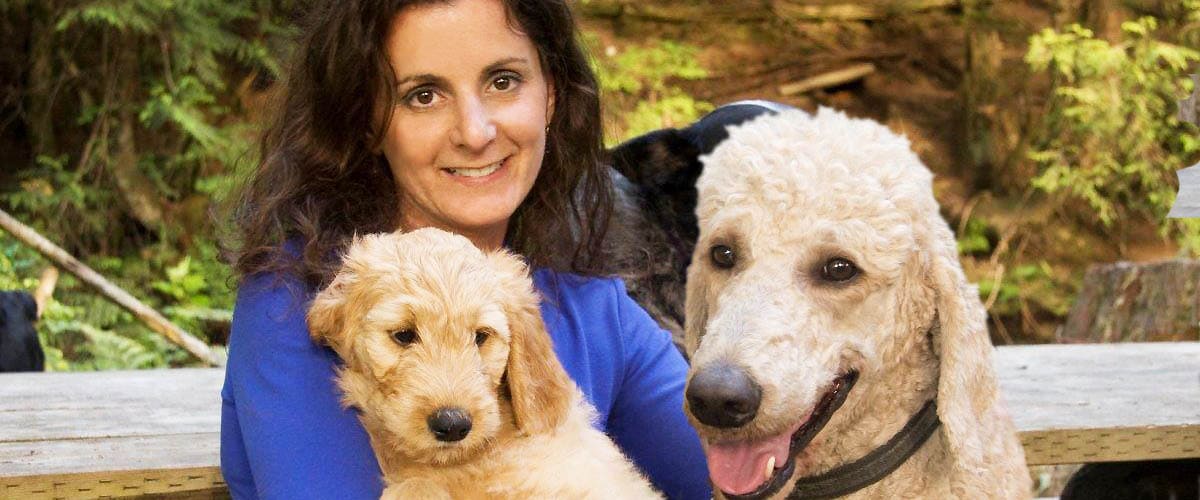
This week on Animal Party with Deborah Wolfe, listener questions spark a fascinating and funny deep dive into the minds of our pets—featuring special guest Stanley Coren, author of The Intelligence of Dogs. Can dogs really have OCD? Are we over-labeling our pets with human psychology—or are science and behavior more connected than we think? From Prozac for pups to the surprising truth about breed instincts, Deb and Dr. Coren explore how genetics, lifestyle, and training shape behavior. You’ll also learn why a bored Border Collie might redecorate your house, how to choose the right breed for your life, and whether 21 days is really enough to break a bad habit (spoiler: not even close!). Smart, insightful, and full of humor, this episode helps you better understand what makes your pet tick—and how to create a happier life together.
For pet laughs and great social media posts see Deb Wolfe-Pet Expert on Facebook at https://www.facebook.com/debwolfepetexpert/ .
Please subscribe and tell Deb what you'd like to see her demo with dogs and cats on DebWolfe.Pet Expert on youtube. You ask and she'll deliver.
Listen to Episode #266 Now:
BIO:
Stanley Coren is Professor Emeritus in the Department of Psychology at the University of British Columbia. His undergraduate degree is from the University of Pennsylvania and his doctorate in Psychology is from Stanford University. He is best known to the public for his popular books on dogs and on general psychological issues, however within the scientific world he is also a highly respected scientist. He has published over 350 scientific reports in professional journals as well as 19 books for students and professionals. He has received many honors and awards for his scientific work, has been named a Fellow of the Royal Society of Canada and was named as one of the 2000 outstanding scientists of the Twentieth Century by the International Biographical Society.
His engaging writing style has made his books for general audiences extremely popular. All of these books, including “The Intelligence of Dogs,” “How to Speak Dog,” and “How Dogs Think” have reached bestseller status. His recent his book for children, “Why Do Dogs Have Wet Noses?” received the Animal Behavior Society’s award for the best “Children’s book of the Year” and also the Red Cedar Award for best children’s informational book. His newest book, “The Modern Dog,” explores the relationship between dogs and humans. He has also received the Writer of the Year, from the International Positive Dog Training Association, for his most recent works.
Many professional associations have recognized Coren’s work with dogs. He has received awards from several major police dog organizations including the California Canine Narcotic Association who cited him for his “continuing contributions toward the understanding of canine behavior.”
Coren’s knowledge of dogs has often caught the attention of the media and he has been the subject of feature articles in USA Today, New York Times, People Magazine and others. He is a popular guest with broadcast media and has been featured on numerous television programs including Oprah, Larry King, Dateline, 20/20, Maurie Povich, Good Morning America, Charlie Rose, the Today Show and many more. He was the host of the nationally broadcast television show Good Dog! and is now seen regularly on Pet Central on the Pet Network. He is also a regular contributor to a number of dog and pet related magazines including Modern Dog, AnimalSense, Pets Magazine and Puppy and Dog Basics, among others.
Transcript:
Hello, you're listening to Animal Party on Pet Life Radio. It's me, Deb Wolf, and we've been answering some listener questions. You can send in an email or a text or a voice clip to debatpetliferadio.com and we will answer your questions on air and play them, usually for an expert.
So I want to know, is it okay, Dr. Koren? Dr. Koren is our guest. He's a professor of psychology and he writes for Psychology Today, and he's had many, many best-selling books, including The Intelligence of Dogs, and he's one of my favorite guests. We used to travel when I did the Bad Dog Tour, he'd have the booth next to me with one of his books and we'd watch each other's animals on occasion.
So we've had a long friendship, but now he's a regular guest on this show. And I want to ask him, when people write in and they say their cat's retarded or their dog's OCD or their dog's been put on meds for OCD, I hear these terms that I feel are psychological terms and terms that maybe young people want to have as labels for themselves. But is it really true to label pets with these names? Well, if you want the science of this sort of thing, dogs are similar enough psychologically to humans so that for things like depression, some forms of paranoia, some forms of OCD, and that sort of thing, that dogs are actually being used as research models.
And in fact, the best aging research which we have, looking at precursors to dementia and that sort of thing, is work which is being done on aging beagles. So yes, it is certainly the case that researchers out over there are looking for the similarities between the psychological states of dogs and the states in people. The real surge forward in terms of this came from a wonderful guy by the name of Nicholas Doddman, and he's from Tufts University.
And Nick studied strange behavior in dogs, if you will, things which look like they were OCD or things which look like they were some sort of strange form of phobia. And one of the things which he found was that the dogs responded to exactly the same pharmaceutical drugs that humans did. So you can think of the fact that humans respond to Prozac when they have anxieties, and that sort of thing.
And treating dogs with something like Prozac has been so successful that Libby actually has a beef-flavored Prozac tablet specifically for dogs. So yes, there is some sort of continuity. And in fact, some of the same treatments which we can use for people can be used for dogs.
Obviously, you're not going to lay Lassie down on a comfortable couch and ask her about her mother. But, you know. Tell me about your ex-husband, Lassie.
Was he a good man? Did he father the children well? Yeah, it's not going to go over. No, no. So talk therapy is probably out.
But okay, so we're going to go to break. But I do have a question here. Before we go to break, we'll leave you thinking about this in the audience.
Like, where do you draw that line between a dog bred to do something like a border collie, a blue heeler, an Australian shepherd, something like organized sheep, something, you know, that requires very particular, meticulous attention to detail and activity? Is that dog OCD or is it just well-bred? Okay, we're going to come back and talk to Dr. Stan Korten about that. Because I have seen border collies back in the 80s and 90s, mostly, where the people were drugging them so they could be couch potatoes. That's how it felt to me.
Okay, so stay tuned. We'll be back on Animal Party Pet Life Radio. Hello, we're back on Animal Party Pet Life Radio.
And I'm sure there are reasons, in some cases, where dogs need these meds. But do you think there's sometimes they're just not exercised enough or given enough to do? Well, earlier you mentioned the fact that in the, you know, in the 80s and 90s, you know, people were being driven to distraction by their border collies. And the bottom line there is that there were behavioral problems.
But the behavioral problems had to do with the living conditions of these dogs. I mean, a border collie needs a job. If it doesn't have a job, then it's going to figure out some way to occupy itself.
The thing with the border collies is if they don't have a job, then they will do things to occupy themselves. So, you know, I heard stories of border collies stripping the wallpaper off of the kitchen. I mean, you know, they were just looking for something to do in the hours which you were out of the apartment.
There was this one that used to organize all the shoes. And he would put like, it was like a ta-da thing. He would arrange all the shoes, the street shoes and the dress up shoes.
And he'd come into the room and wait for you to say ta-da. And then he'd go back and he'd rearrange them. OK, all the lady shoes, all the men's shoes come back in ta-da.
And then he'd rearrange them again, all the brown shoes and the white shoe. And it was like, OK, this dog needs some sheep, really. Well, I mean, part of the major problems which people have sort of fitting a dog into their life is that they don't look at what the particular dog was bred to do and what its activity level is.
And they end up choosing a dog which is either too active or not active enough. I have a solution for that. Like if you really, really love a particular breed, and when you were younger, it suited you, used to run all the time and your Border Collie or your Aussie Shep or Ridgeback or whatever it was, your Dalmatian was perfect for you.
But now you're 60 and you like leisurely walks. Just adopt an older one. And, you know, a six-year-old is going to be perfect of one of those breeds for you now.
But don't get yourself a puppy or a one-year-old hyperactive athletic sporting dog if you're not hyperactive, athletic and sporting yourself. Right? Right. And, you know, the same thing is if you don't want a dog who will rush up to everybody who they see and say, oh, you're my long lost brother.
Hello, new friend. We haven't met yet, but we're going to love each other. That's right.
So you don't get a retriever. You don't get a spaniel. Then, you know, get yourself a terrier or something.
So it's really important that you pick a dog which sort of fits your lifestyle. I mean, if you're out of the house all the time, then, you know, you can get yourself a bulldog. It'll take them six or seven hours to recognize that you're out of the house.
And then when you get there, they're going to say, oh, look, you know, you come back and that sort of thing. So, I mean. Have you ever met a bulldog with separation anxiety? Because I have not.
No, no, you don't. Don't count them time at all. They're like, OK, I'll have a nap.
Everything's good. So, you know, that's part of the trick. I mean, and some of the things which dogs do and do fairly naturally is wired into them.
I mean, you know, let's be honest. Retrievers retrieve. OK, so, you know, I had a flat coated retriever.
And when my grandchildren would come over, all of their plush toys would disappear. And the reason is that that Odin would collect them all and store them in the footwell of my desk. And he's a retriever.
I mean, that's what retrievers do. So and if you don't want a dog which is going to chase every glint of light, which flickers across the floor when the sun filters through the leaves of the tree outside, then you don't get a terrier because that's what terriers do. I mean, they chase anything which moves.
But they can be really delightful and learn so many tricks and be really sort of clever in the house. You know, so people like them. People like terriers.
And I had a Cairn Terrier, which I absolutely loved. But, you know, I eventually wrote a book about him. And the subject of the book is actually the 14 year war, which my wife had with that dog.
Well, if you have a fence and there's like a laneway where people walk by, you can't have a terrier. You just can't. I mean, it's too much barking.
OK, we're going to go to break and come back with Dr. Stan Coren on Animal Party Pet Life Radio. Stay tuned. Hello, we're back on Animal Party Pet Life Radio.
And I want to ask you because you mentioned flat coated retriever. And I know we're going to be watching that bridge in the news for the next year, two years, five years. I don't even know how long it's going to take them to rebuild that bridge near Chesapeake Bay.
So I think it's a good time because occasionally we just talk about a breed on the show. Chesapeake Bay retrievers. Now, I've encountered them quite a bit because they're not as easy to deal with as labs, in my experience.
They tend to have some training issues. So do you want to give a rundown of what to expect if you were to get these brown, beautiful, looks like labs with curly hair, but. OK, a little bit of history.
All retrievers tend to be sucky faced because we bred them to be very much attuned to human beings. And that's really important. You know, a lot of the use which they get in hunting is they have to sit in a blind, you know, quietly while you wait until the ducks fly over and then you knock them down and the retriever works.
The Chesapeake Bay retriever was originally bred to have really fine cold water resistance. That's that curly coat comes with a lot of lanolin under it and that. It's sort of thick and sort of wavy and a little bit wiry to the touch.
That's right. And if you sort of scrunch your fingers through the coat, you'll find that they get a wee bit oily and that's because of the underlying extra layer of lanolin. Now, these dogs were used to go out into areas like the Chesapeake Bay and retrieve ducks.
And so they needed that cold water resistance. But the people who were out over there hunting ducks, a lot of them were commercial hunters. So they would bring the ducks in and throw them, which they knock down and throw them in the back of the truck.
And the big problem is that people would come by and steal the ducks. And so they bred into the Chesapeake Bay retriever that sort of guarding instinct. So they are the most aggressive and pushy of the retrievers.
Now, when I say aggressive, it's certainly we're not talking about Rottweiler aggressive. We're talking about a dog which is... Or Dogo Argentino or Dave Corso. We're not talking gladiator.
We're just talking not a mushbucket lab. That's right. And so they can be a bit pushy and dominant, but they've been bred that way specifically.
So that's why they're a lot more of a handful, because we bred into them that sort of bit of hardheadedness. And we did a good job. Is it also true that the color of a lab makes a difference? Like chocolates tend to be a little higher strata.
I found they're a little more high energy, the chocolates, but I don't know if that's just my personal experience or the type of people who adopt them. But they don't... You know, the black labs, yellow labs, chocolate labs, is there a difference depending on color? Yeah, there are a lot of differences. One of the things is their size.
Black labs tend, for the most part, to be closer to what the original standard of a lab was. Short, stocky, that kind of thing. 22 inches at the shoulder.
They were meant to be pocket retrievers. And the yellows tend to be the largest. I mean... They're tall, yeah.
You can find them at 26 inches at the shoulder, which is, as far as I'm concerned, that's no longer a lab standard. But I mean, you know, they're labs. The chocolates tend to be a little bit more excitable and a little bit less sucky faced, which means, you know, for me, you're taking out some of the characters of a lab.
The yellows are more standoffish than the blacks, but that's not by much. I mean, so, I mean, there's still dogs which will, you know, lick a woman's makeup off given the first chance it gets. Clean up a stroller after the kid's been removed.
Exactly. Or not, while the kid's still there. Yeah.
Well, labs are noted for sort of cleaning up all the deer poop on a trail, among other things. Yeah. Okay.
So, you know, it is allergy time. We kind of touched on that. If you have allergies, you might have a hypoallergenic dog, but it won't make any difference if it runs through a forest full of pollen and then comes in the house.
So, you got to keep them groomed short and brush them often and bathe them and all that if you want to stop the allergies from coming into the house. I just thought I'd add that little warning. Are you doing all that with your pets, Dr. Korn? Well, we give the house a weekly, absolutely thorough vacuuming.
And my toller, my Nova Scotia Dovetailing Retriever, is a working therapy dog. So, he has two or three therapy sessions to do each week. So, he gets brushed out before every single therapy dog session.
So, that should be keeping things down. But three or four blocks away from me are a row of cherry blossoms. Those are the worst.
They don't even have fruit. I hate those trees. I hate those trees.
Well, they're not trainable. So, you know, the pollen comes into the house. Okay.
Well, they say, and I've read about this before, but Jim Davies, he's a professor at Carleton University, he says 21 days for a human to replace a bad habit. And I've been meaning to ask you about this because it seems to me like that's way too short. Like even for me, even a simple bad habit, like skipping breakfast, 21 days, I could easily go back to skipping breakfast.
Nevermind smoking cigarettes or biting your nails or picking at your skin or some of the things people do. And then I'm thinking of animals, right? Animals have habits. A lot of my training is replacing a dog's bad habit with a good, you know, his bad habit is jump on you when you come home from work.
His new habit is bring you a toy and sit, right? How long does it take before he'll do that automatically? I think without you telling him, I think he'll go back to his old behavior. If you don't tell him every time, hey, get your toy for at least a few days, if it's a hundred percent. But if you make a mistake or anybody else rewards him for the old behavior, I think 21 days isn't enough, right? Oh, anybody who gives an arbitrary number like that is plucking cherries off of a tree which doesn't produce them.
Yeah, it's the trick is, you know, it's like, would you like to borrow my chainsaw? Because I am happy to have less cherry trees. I'll come over. Anyway, you know, people are always asking, you know, how much time do you spend training your dogs? You must spend a huge amount of time because your dogs are well behaved.
And the answer is, I don't spend any time training my dogs. Right. It's just part of your routines, right? Exactly.
And that's the flip side of it. You know, I never, I never. It's every moment is a training moment because they're not allowed to be rude.
They have to be what you want them to be all the time. That's right. So, so, for example, you know, next to the, the front door on a little shelf, there's a bowl of dog treats and my dogs are trained to, you know, sit and wait until somebody is invited into the house before they greet them.
And they are rewarded for that every single time. I mean, you know, and we're talking about my taller, for example, is, is, is close to 10 years of age. And he still gets rewarded.
So 21 days, I don't know, you know, 21 years. So, okay. So old dogs, we mentioned it before that it might be harder to teach an old dog like that fearful border collie to overcome her fear.
Whereas a young dog can, can kind of expand its trust, its view of what it can trust. But old dogs do learn new tricks. Like I can, just your example right there.
If I was staying over at somebody's house and their dogs were horrible at the door, I would have them trained to sit for treats at the door in a day, probably because they can lining up where the treats are. They're not stupid. They're opportunists.
Right? No, exactly. I mean, I'll give you an example. In our dog club, we had a gal whose daughter had a care interior and her daughter went off to college and Dree was left to take care of the dog.
It turns out the dog had not been trained for anything. I mean, it, it, it had been housebroken and it knew how to sit. But, but other than that, Folly just, just, you know, knew nothing.
So at eight years of age, she brought the dog into the club for training and she trained the dog, took a year. She brought the dog in for a CKC trials and managed to put a CD, a companion dog degree on the dog just before she turned nine. So yes, you could, you can train an older dog if you're consistent.
And if you make training something, which the dogs really want to do, the trick here is that the dog has to enjoy the training. It's not that, you know, you're, you're pulling them out and putting the training collar and that sort of thing, because for an hour, you're going to abuse them, you know. Lots of reward and play and happy and stop and start and stop and start.
But I'm just thinking, you know, that's a dog who didn't know how to learn. If you have a dog that already knows how to learn, like I re-homed a three and a half year old standard poodle that I worked with first. And she, and so in her new home, they didn't like to speak English.
They preferred to speak German, which she learned in one day. All the commands, right? Like she was ready to learn. So you can re-home a foster dog or an older dog and get them trained up.
You don't have to think, well, you know, I can't train it. No, of course they can be learned to be in your home, right? They can learn new, new rules, new habits. Well, I hope so.
I mean, I'm 81 years of age and I used to like to feel that I'm still learning. Me too. All right, everybody.
Well, I guess we'll end the show on that note. Oh no, one more thing. Let me ask you, because you touched on it.
What's the difference between a Nova Scotia duck toller and the other retrievers? And why toller as opposed to retriever? What's going on there? Well, he's, he's a duck tolling retriever. The tolling, a toller comes from tolling the bell as in, you know, to call the parishioners in for church services. Okay.
What the tollers are, are bred to do is they are bred to run up and down around the shore, twirling around, making this God awful screaming sound. And the ducks fly over to see what the hell is happening. Oh, the duck call.
That's, and come within range of the hunter's guns and they get knocked down. And at that point they become proper retrievers. They're supposed to be able to, to splash out into the water and retrieve a five pound duck.
So that's where they get their name. So if you take a regular duck toller that hasn't had a lot of training, that someone's pet, and you walk it in a park and there's a whole bunch of ducks in the, in the pond, is it going to make that God awful sound? Yeah, it's called the toller scream. Yes, it is.
And you know, for people, for people who are interested, just go on YouTube and use the search terms, toller, T-O-L-L-E-R, scream. And you'll get to see tons of clips of these dogs doing that sort of thing. So that's why they're not more popular, even though they're little red golden retriever type gorgeous little things.
And now I understand. Exactly. And that's why some therapy dog associations don't take them as therapy dogs, because they're afraid that if you you're walking down a hospital corridor and something exciting happens and the dog goes into that screaming mode.
I mean, that's not good to have in a hospital. I'm going to go look it up as soon as we get done with the show. I can't wait.
OK, well, oh, my goodness. Thank you so much for coming again to Animal Party, Pet Life Radio. Dr. Korn, it's been great having you.
It's been good talking to you, Deb. All right, everybody, you've had a crack at the professor. If you send me some more to Deb at PetLifeRadio.com, Deb Wolf at PetLifeRadio.com, anything like that, it's going to get to me and we will put it on the air.
It can be a voice clip or an email question, a query. Why does my dog do this or how can I change this in my house with my pets? What can I do? Just ask me. And if I can't answer it, I'll get an expert to answer it.
All right. Thank you, Dr. Korn. And thank you, Pet Life Radio from us and from me, Deb Wolf.
Be good to your animals.