
Opinionated Animals, Unforgettable Lessons: Michelle Lerner’s Extraordinary Animal Life



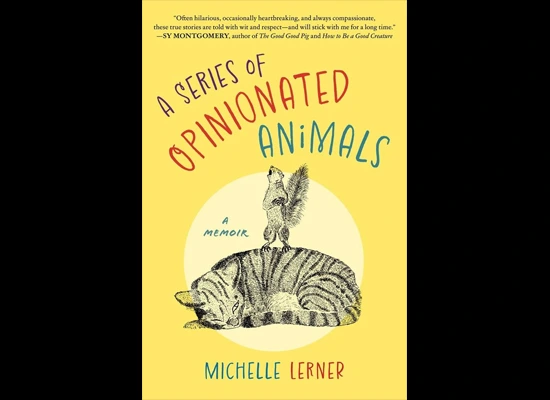
What do a neurologically impaired squirrel, a disabled sheep who herded cats, six cats with feline leukemia, and a beloved former police horse have in common? They’re all part of the extraordinary life of Michelle Lerner, author of A Series of Opinionated Animals: A Memoir. On this episode of Best Bets for Pets, Michelle Fern talks with the Harvard-educated lawyer, author and lifelong animal advocate about the rescued animals who shaped her life and taught her to see beyond age, illness and disability.
Michelle shares the unforgettable story of Teddy Bear, a tiny, mostly hairless kitten with serious health challenges and an enormous personality; Lamby, the disabled sheep who wore children’s skateboard pads and actually learned to herd cats; and Shire, the horse she calls her soulmate, whose influence helped set her on the path to animal law. Michelle also reveals how an animal-rights sticker on her Harvard Law School locker helped spark a student movement that eventually contributed to animal law being taught at Harvard. It’s a funny, moving and inspiring conversation about rescue, advocacy and the remarkable lessons animals can teach us when we recognize their value for who they are.
Listen to Episode #373 Now:
BIO:
Michelle Lerner is the author of the novel Ring (Bancroft Press, 2025), the memoir A Series of Opinionated Animals (forthcoming, Bancroft Press, 2026), and the poetry chapbookProtection (Poetry Box, 2021) . Her writing also appears in Time, The Hill, VQR, Shenandoah, Lips, Paterson Literary Review, and many other periodicals and anthologies.
Michelle received an MFA in Poetry from The New School. Her novel Ring was longlisted for the 2026 Aspen Words Literary Prize and was a finalist for the Golden Crown Literary Society's debut novel award. Her poetry manuscripts have been selected as semifinalist for the Pamet River Prize and Willow Run Poetry Book Awards.
Michelle directs the Laura Boss Poetry Foundation and mentors writers in Gaza through We Are Not Numbers. She’s a recovering public interest lawyer emerging from late-stage Lyme Disease, living with her family in rural New Jersey. Michelle Lerner is a former public interest attorney and animal law education pioneer, A magna cum laude graduate of Harvard Law School, she co-founded the Student Animal Legal Defense Fund, successfully lobbying for Harvard's first animal law class. She later drafted municipal and state legislation, co-chaired the New Jersey State Bar Association's Animal Law Committee, and founded a local rescue that helped her town achieve no-kill status. When illness left Michelle unable to continue practicing law, she turned to writing stories.
Transcript:
Michelle Fern (0:00): Welcome, everyone. Welcome to Best Bets for Pets. I'm so excited to have you here. We have a great show today. I just read the most amazing book. It's A Series of Opinionated Animals by Michelle Lerner. Talks all about animals and that's what we're about. So stay tuned. We'll be right back. It. Foreign. Welcome back, everyone. I'd like to welcome Michelle Lerner. She is an author and a Harvard educated lawyer that has an incredible passion for animals and has written the book called A Series of Opinionated Animals A Memoir. Michelle, welcome to the show.
Michelle Lerner (1:17): Thanks so much. Thank you for having me.
Michelle Fern (1:20): I'm so excited to have you on the show. Now, your book is A Series of Opinionated Animals. What made you write this book? And you're a lawyer, but you're an author and you have such a passion for animals. A lot of cats are mentioned, but you also have the range from squirrel to do horse to, I mean, it's unbelievable. So what made you think, I need to write about this?
Michelle Lerner (1:45): So I, I was a public interest lawyer for about 20 years, about 10 years of that. I practiced animal law and I then got sick about 10 years ago and had to stop practicing. And I started writing. I'd always been a writer. I'd been mostly a poet. I'd gotten an MFA in poetry on the side when I was working as a lawyer. And I published a novel last year, a very serious literary fiction novel about grief. And after that novel, I was going to start on a historical novel. And my spouse Gray, who's mentioned in this book a lot, had read how to Be a Good Creature by Sy Montgomery, the great Sy Montgomery, who's authored a lot of books about animals. And he said to me, you should write a memoir about the animals in your life and our animals. And I said, why? Why would somebody want to read that? A lot of, a lot of people have animals. It's a very common thing. And he said, I don't think it's very common to have a neurologically impaired squirrel, a disabled sheep and six cats with feline leukemia at your house or to go to Harvard Law School because of your horse.
Michelle Fern (2:59): Wait, you said, people have said that's a, that's a common thing.
Michelle Lerner (3:03): When he suggested that I write a memoir about our animals and the animals in my life, my initial reaction was, why would somebody want to read that? A lot of people have animals. It's a common thing to have animals. And he pointed out that the way that we have had animals and the animals that have been in my Life and what they've motivated me to do, including at law school, is not common and is something that was worth writing about and that people would want to read and hear about and that there was a larger message to it. And that's. You know, I actually sort of. I was on an online group with other writers and I kind of polled them as to whether they thought I should start on the historical novel or on this. And in talking about why I might write a memoir about my animals, I said something like, I've had a series of opinionated animals. And one of the other writers wrote back, well, you obviously need to write that book. And that's the title and that's how it started.
Michelle Fern (3:59): I thought it was amazing. It was so interesting. And I've read a lot of animal focused books, memoirs, all kinds, and I really liked it. What made you decide that you have a neurologically impaired squirrel, cats, a rabbit, you have a. Had a disabled sheep, a horse and some other characters. What made you realize that? Or, you know, you're so animal focused, or did this just come at an early age for you?
Michelle Lerner (4:28): Yeah, I mean, I grew up. I was an only child and I grew up in a house full of animals, all of whom were rescued. Most of the cats just showed up. A couple came from the pound. And my parents treated the animals as part of our family. I think I kind of viewed them as siblings in some way. And, you know, at the point when I was eight years old, I started taking riding lessons at this hack stable in my town. My mom wanted me to take horseback riding lessons, and I met this horse shire there who I fell madly in love with, who had a leg injury. And when he was going to be sold for slaughter, my parents rescued him and I became his caregiver and champion and protector at the age of nine. So my life was very shaped from an early age by the animals in my life and by the ethic of rescue and caring for animals and viewing them as people and providing them the same kind of care and respect that you would another human.
Michelle Fern (5:38): You focused a lot on animals that were, you know, animals with, for lack of a better way to say, like issues, you know, that were had more older or had something wrong with them. The animals that, you know, are kind of left behind in a way. Why were you drawn to those animals?
Michelle Lerner (5:56): I don't know if it's that I was particularly drawn to them or if I was able to see who they were beyond that. And because other people couldn't, they were in a position where they needed Somebody to take care of them. I mean, I think that's how a lot of the animals ended up in my home when I was young and. And, you know, I was not drawn to my horse shire, who really was my soulmate. I was not drawn to him when I was 8 because he had a leg injury. I didn't even know he had a leg injury when I met him. I was drawn to him because he was very funny and smart and personable, and I was drawn to his personality. But I ended up spending a lot of my life with him because he had an injury that was going to result in his death. Because to the people around him, he was mostly worth what he could do for them in terms of being ridden and earning money. So with him and with a lot of the others, I don't think it's that I was drawn to them because of their disabilities or age or other issues, but that I ended up with them because of those issues or their age because they had nowhere else to go.
Michelle Fern (7:09): Thank you. So was there a particular cat in all of the cats that you adopted that made you really change the way you understood animals or your relationship with them?
Michelle Lerner (7:21): I've had so many cats. I mean, I grew up with seven cats, and I've probably had more than 30 of my own, and they've all affected me a lot. I think one who I think about often in the way that you're asking is teddy bear. Who's in the book? I was actually gonna. I could read a couple of pages if you want, about. I was thinking of. Oh, I'd love for you to reading, like, how teddy bear came into my life. But the reason, you know, he had pretty severe health issues and disabilities, but he also had the biggest attitude of any cat I've ever known. And I think, you know, what he taught me is that the way that we look at life and our attitude toward life and towards others and what we think of ourselves really does not have to be limited by anything physical or any part of our circumstance. It might make a little bit more sense. If it's okay, I can maybe just read, like, two pages about how he came into into our lives, and I can talk about him a little bit more.
Michelle Fern (8:24): Sure, that's fine. It.
Michelle Lerner (9:06): While my group and I were fighting to get tnr that that's trap neuter, return aloud in my town, the business administrator of the next town called and asked for help. Their only apartment complex was completely overrun with feral cats. I went to assess and encountered a situation that was a cross between where's Waldo and a Stephen King novel. The sprawling complex was practically carpeted with cats. They were in every walkway, every parking lot, and spilling out of every dumpster. Adults and kittens. Lots of kittens. I quickly organized a TNR program in that town and one of the residents agreed to foster the kittens while I set up an adoption program. Her living room turned into a nursery school for tiny felines. One night she called to say that while she was checking traps at the apartment, a a couple had come out of an apartment holding a very tiny, trembling and mostly hairless kitten they said they'd found outside and had been trying to care for. The volunteer thought the couple seemed hopped up and surmised the kitten had somehow accessed meth. She convinced them to hand him over and she took him home, but he needed to see a vet first thing in the morning. She estimated he was four weeks old since he was able to eat on his own, but said he was the size of a two or three week old and couldn't move around much on his own. I picked the kitten up the next morning and took him to a vet who was helping us. The vet didn't know what to make of the tiny, bald, shaking kitten. The kitten seemed to have a neurological problem affecting his movement as well as several different infections. He was anemic and covered with fleas. His face was oddly round and his ears were about twice as long as those of other kittens and sprouted thick tufts of the only fur on his body. He looked like a feline version of Yoda. I asked the vet if the kitten would make it. Well, he said, every other kitten I've seen who looked like this has made it. You've seen other kittens who look like this? I asked hopefully. No, he replied. Not a single one. Have you? After the appointment, I had to bring the kitten to my own house for an hour until the volunteer who was fostering him got home. Because he was too small for flea treatment and still needed a bath to get them off, I didn't bring him in the house. Also, truth be told, I didn't think Gray would react kindly to me bringing him in. When I'd started with the TNR business, I'd promised it wouldn't result in me bringing the cats home. So it was that Gray came out onto the front porch where I was sitting with a tiny, sick, mostly hairless kitten with a face that looked like Yoda's, who was trembling all over while holding onto my finger with his front paws through the grate of the carrier I was ready for a fight. I could barely get myself to look at the kitten. His appearance was so sickly, so strange, so alien like. I cringed at what Gray's reaction would be and opened my mouth to tell him the kitten would be gone within the hour. But Gray's face lit up and he exclaimed, oh, my God. I've never seen a kitten this close. This is what they look like. He's so cute. I blinked in disbelief. He'd never seen a kitten up close and he thought this was what they normally looked like and he thought he was cute. I knew at that moment that we were going to adopt the kitten. It was all over Gray's face. And really, who else was going to adopt him? He clearly had a long and uncertain medical road ahead of him.
Michelle Fern (12:49): Thank you. That was great. You and your husband, very patient and amazing people. There was a part in the book I still remember this where when you we got to later when you were pregnant with your child and you said something, I don't remember exactly, but you know, I might use the card that I'm carrying his fetus so he can't deny me for adopting, I think yet another animal. But I was like, laugh out loud. Funny. I can't even imagine. You were at the vet. You probably could be a veterinarian with. How much do you ever feel like that that you could probably be a veterinarian with all the caretaking you've done, especially with the cats.
Michelle Lerner (13:26): My whole life, people have asked me why if I was going to be a vet or why I didn't go to vet. And sometimes when I'm in veteran medical offices, I get asked if I'm in the medical profession just from all the often unfortunate experience I've had with medical issues with animals. But I don't think I could have ever become a vet because it requires too much, not only losing of animals and euthanasia, but dealing with humans who don't actually want to put in the time and care that's required to care for sick or elderly or disabled animals and who ask for them to be euthanized or who don't have the resources to. I'm in a very different position doing what I can through rescue and advocacy than I would be as a vet. And I'm so grateful that the vets who have helped the animals in my life didn't have that perspective and went through vet school and do what they do. But it's not something that I ever really considered.
Michelle Fern (14:24): We talked about your horse when you talked about Chire. You said that. That Shire was the disabled horse, correct?
Michelle Lerner (14:31): Yeah, he had a leg disability from. He had been a police horse and had had an injury on the police force.
Michelle Fern (14:37): So Shire had a great impact on your life. I know that you had him when you were fairly young.
Michelle Lerner (14:43): Yeah, I met him when I was 8, and I became his caregiver when I was 9 and. And he lived until I was 22.
Michelle Fern (14:51): Do you think he changed you for life as far as your relationship with animals?
Michelle Lerner (14:55): I think he changed me for life in terms of my relationship with everyone and with the world. I think he was sort of the defining relationship in my life. You know, I refer to him a lot as my soulmate. And I really feel like that I grew up in a home where there was a lot of care taking of animals going on, but I was a child. I wasn't the person who was responsible. And I think becoming responsible for him at the age of nine definitely shaped who I was growing up in terms of a caregiving ethic and a type of responsibility. And also the fact that I needed to advocate for him all the time to get the care that he needed, to get access to things like pasture, finding barns where we could be. I think it's a little bit different now. There are more people that are caring for horses that they don't ride. But it was a very unusual thing at the time. And people at most of the barns were sort of, you know, quote, horse people who had their horses because they rode them, and if their horses became unable to be ridden, they got rid of them in one way or another, selling them, euthanizing them. And my caring for Shire and my parents, paying Shire's bills when I wasn't riding him seemed almost offensive to a lot of them and maybe kind of threatening, maybe threatening in some way, because I think they were able to justify in their minds to say that they loved their horses, but justify not caring for them if they weren't able to be ridden. And I think that Shire's existence and my relationship with him challenged that to some extent. And so from a very young age, I was having to kind of defend his. His worth and why he was alive and why he deserved to have access to what other horses had access to. And I think in a lot of ways, that probably made me the advocate that I am. And, you know, we just also had a very intense bond that I think probably influenced the way that I've been open to other animals and also other humans in my life.
Michelle Fern (17:13): Okay, we're going to take a short break. And we'll be right back. Welcome back, everyone. We're talking to Michelle Lerner. She wrote the book A Series of Opinionated Animals, a Memoir. So, Michelle, also in the book, you have a disabled sheep that learned to herd cats while wearing children's skateboard pads. Just reading that makes me go, what? Like, what? Where? How did you do that? But I loved it in the book. How in the world did that happen? How did you end up adopting a sheep that herded cats and wore special knee pads?
Michelle Lerner (18:28): So in 2000, when I was. I was still. I was a legal aid lawyer at that time in Boston. And Gray and I bought a house and moved into a rural area in central Massachusetts. And we had three big dogs. And I really missed having cats. And he really didn't want to adopt any more animals. And so I started volunteering at a local cat shelter that was an unusual cat shelter. It was unusual in that it was attached to a house and it was sort of owned and run by the person who lived in the house. It was no kill at a time that most shelters were not no kill. You know, even she took in and took care of cats with feline leukemia, which nobody else was really, or very few shelters were doing. She also took in a lot of other animals that were not cats. And when I showed up one time for my volunteer shift, the garage was open, and there was a lamb in the garage in a little puppy enclosure. And she was kneeling on her front legs. And I. I went over to see her, and she put one of the legs out in front of her, the foot, but it remained bent. And the other one stayed on its knee while she ran away from me and hid behind a cage. And when I went in to ask what the deal was with the lamb in the garage, it turned out that another volunteer had, who lived in New Hampshire next to a sheep farm, had learned that this lamb was born unable to straighten her legs and that the farmer was going to kill her at three months old. And she scooped up the lamb and brought her to the cat shelter and left her there. So they named her Lambie. They had this weird idea they were going to be able to figure out how to straighten her legs through physical therapy, which didn't work. I tried getting her surgery, which didn't work. And she eventually was moved into the feral cat yard where she lived with cats until she was two years old. And we moved to New Jersey and took her with us. But during that time, she really grew up with cats and had a group of cats that followed her around and she also, as she got bigger, she started getting bloody knees from walking on them. And we tried to figure out a lot of different ways of addressing that. And the thing that ended up working was a child's elbow pad for skateboarding. We used to go to a skate shop to get her her knee pads. So she wore these knee pads. And when we moved to our house in New Jersey, we had a few cats and we had a fenced in yard with cat fencing on top to, to keep them in. We only let them out though, still, if we were with them. And Lammy was used to living with cats, so she liked them and liked to spend time with them. And when it was time for them to come in and we would try to get them in and they wouldn't want to come in, she would run around and nudged them and sort of heard them herd them to the door. So, yeah, it's totally contradicting the idea that you can't herd cats. Lammy had it down.
Michelle Fern (21:35): Yeah. Hey, when there's a will, there's a way, you know, and animals have their own way of vibing with each other. They just do. And I haven't seen that a lot. The most I've had is I'm way more basic and boring than you. I've had dogs and cats together, but you've had the whole, you know, whole menagerie. Let's talk about a little bit more about your background because you eventually went into a animal law and you also helped establish one of the nation's early animal law programs at Harvard. How did you do that? Why was that important for you?
Michelle Lerner (22:07): So at the time that I graduated from college, that I was finishing college, my horse shire was really very clearly nearing the end of his life. He was elderly and his legs were getting much worse. And I was interested in going to anthropology graduate school, but I, I was not able to sort of think about what I was going to do or apply for school or for career type jobs because I was very focused on being with him and taking care of him at the end of his life. And that summer after college, I got a job working at the farm where he was living. And when he died, when, I mean, he was euthanized and he became completely paralyzed in his back end at the end of that summer, I was very disoriented, not only from losing him, but because, you know, I just graduated college, all of my friends had sort of moved on to things and had five year, ten year plans and I did not. And I read about Gary Francione who is an animal law professor at Rutgers Law School. And I had never heard of an animal lawyer. You know, there were some, but there were not many, or an animal law program. He taught a class, a couple of classes, and he had a clinic. So I started looking into going there. Having just lost Shire and having sort of advocated for him his whole life, I kind of felt like the best way to honor him was once I found out about this program was to become a lawyer for animals. Part of how I found out about Gary Francione is I read this really incredible book that he'd written called Animals Property and the Law that talked about why it was really impossible to help animals on any kind of large scale through the legal system because of their classification as property. And what would need to happen to change that. And, you know, being 22 years old, I decided that was going to be my mission, that I, I would work on changing that and I would try to go to this program. But my then boyfriend Gray was leaving to go to graduate school at Harvard the next year and my mother, without my knowing, you know, this was the time of paper applications, sent away for an application to Harvard Law School, filled it out, attached my transcripts, and then just convinced me to, you know, write the essay and the things that needed to actually be done by me. And I wrote an essay about Shire and about wanting to practice animal law, which Harvard Law School did not teach and most law schools did not teach. And when I got in, I went because that's where Gray was going. And, you know, there were no relevant classes there. I was just really focusing on getting through the first year of law school. I took a two week summer animal law class at Vermont Law School. But in my second year I lived off campus, so I had a locker at the law school to keep my things in. And people were putting, you know, it was fall, it was election season. People were putting political stickers on their locker. And I put an animal rights sticker on my locker. It said something like, was your oven cleaner force fed to an animal? And when I came in the next day, my locker was completely covered top to bottom, like a six foot tall locker with notes taped to it, a lot of really hostile, unsigned notes, and then a bunch of, and then a bunch of notes responding to it by people who signed their names. And I contacted every one of the students who had written some kind of supportive response and signed their name and started an animal law student group. There were a few of those in the country, but not many at all. Like really a Handful. And there's an organization that's still around, the Animal Legal Defense Fund. And I petitioned them to let us become the second student Animal Legal Defense Fund chapter in the country. And they said they were only interested in having one that was at Lewis and Clark. They didn't think it would work at Harvard or at other places. It would be too much work. And I really, really harassed them about it until they agreed to sponsor us and let us become a student chapter. And we did, and we started having programs. And then as I was graduating, we lobbied for an animal law class to be taught at Harvard, and we convinced the administration to do it. The first class was taught after I left. You know, I wasn't able to take it there. And as a. As a result, I went into legal aid for 10 years before I came back to animal law. But that class was so popular, and it became so. It was so publicized that Harvard Law School, because of its name, had started an animal law class that Bob Barker from the Price is Right donated a, you know, a very large donation to help start an animal law program there. And at this point, there's been the animal. The Harvard Law School Animal Law and Policy program has been in existence. They're having their. Their 25th anniversary.
Michelle Fern (27:12): I. I think everything he's done has been amazing. Where do you think we are now as far as with animal rights? I mean, there's some states that are very progressive and some states that are not in. There's things that probably should be federal law, you know, like decline. But there's. I think my personal opinion, and obviously, I'm not an attorney or a lawyer, but I think we have. We've made progress, but we have a long way to go. You're the expert, though, being an attorney. Where do you. What do you think?
Michelle Lerner (27:46): I think that there has been progress on very specific types of protections for animals, but very little progress in terms of rights for animals in this country. You know, and the difference between a protection and a right is that a right is something that you can enforce and protect and that the government or other parties cannot interfere with except in very extreme situations. Like if you have a First Amendment right to speech, you yourself can defend your right to that, and the government can only interfere with it if they have a very important interest that can't be met in any other way besides restricting your speech like that. You can't yell fire in a theater or something like that. Animals don't have rights in the United States because they're not treated as people. They're Treated as property. So if they're given a particular protection, it's really up to. If it's a protection that is regulation, it has to be enforced by an agency. If it's in criminal law, it would have to be enforced by the criminal justice system. And the animals themselves do not have a right to enforce it. And you might think, well, how would they possibly. Anyway, an animal can't go to court, but neither can a baby or a child or somebody with dementia or who's unconscious in a hospital. And there are ways for them to enforce their rights by people representing their interests and being a plaintiff on their behalf. There are also non human persons recognized by law, like corporations are recognized in this country as having the rights of a person in a lot of ways. First Amendment rights, other rights, but animals are not. And so even say endangered species protections, there have been a lot of lawsuits to protect against violations of the Endangered Species act and protect endangered species. But the lawsuits, they're normally filed by environmental nonprofits, not on behalf of the animals. They wouldn't be able to. They're filed on behalf of human members by filing affidavits that those human members go regularly and hike in this particular area and either see or want to see this species and that their own life is affected by the violation of the Endangered Species act that affects the animal. So it's not across the board internationally that animals are treated like this. There are a few countries that have recognized in their constitutions or in other ways that animals are sentient beings, that they have some of the rights of a person, that lawsuits can be filed on their behalf, et cetera. That hasn't happened in the United States.
Michelle Fern (30:40): We're progressive, as I think we think we are. There's a lot that we're. We're way behind. We're running out of time. I have a couple more questions. Okay, let's talk about your book again. One of the themes running through your memoir is that animals can teach us how to be better humans. What do you think that animals understand about compassion that we as humans sometimes forget?
Michelle Lerner (31:03): I think that animals do not generally have the sense that they need to deserve things in order to be able to have what they need. I don't think they generally feel like they need to meet particular standards. Often they live in situations with humans where they are only allowed access to resources or to get what they need. If they behave in very particular ways, ways, and they learn to do that, that's called training. But I think on a fundamental level, they do not look at their own quirks or differences as things that should limit their access to the world or negatively affect them in any way. And I think they're much more open to accepting themselves and each other and us for exactly who we are, no matter how different we are or what our quirks or faults are. And I think that's something that most humans have a hard time doing.
Michelle Fern (32:08): What is the one thing you hope our listening audience takes away from reading your book? A Series of Opinionated animals.
Michelle Lerner (32:16): I think an understanding of animals as people. They're not humans. But, you know, I think the term person is not just interchangeable with the term human, that a person is a sentient being with a personality and interests of their own, and that I view other animals as people and as individuals. And I would hope that readers of the book would come away with that also. I think a lot of people do recognize that with the animals in their lives, often, you know, cats or dogs or horses. But I think it's harder for a lot of people to think of animals that they're generally only aware of as species, like, you know, quote, farm animals like chickens or sheep or wild animals like squirrels or foxes or rabbits, as each being an individual person that probably have widely varying personalities. And I hope that by, you know, telling the stories that I tell of animals of different species, that it becomes clear that it's really not just about cats and dogs, that every animal of every species is an individual.
Michelle Fern (33:25): Thank you so much. Where can people find your book?
Michelle Lerner (33:28): Well, it's coming out October 6th. There have been some issues with the distributor, so I don't know what the best way is right now, but it is up for Pre order on bookshop.org, which is where I usually like to send people, because it supports independent bookstores and but it's also available on Amazon and on Barnes and Noble Online, some individual bookstores. Hopefully it'll be at libraries. But at this point, people should be able to pre order it if they're hearing this before October 6th, or just outright order it if it's after October 6th on bookshop.org, barnes Noble or Amazon or really any other place that they normally would buy books.
Michelle Fern (34:09): Michelle, I want to thank you so much for coming on Best Bets for Pets and sharing your book, A Series of Opinionated Animals. Listening Audience that is by Michelle Lerner.
Michelle Lerner (34:19): Thank you so much for having me. It's been really great to talk to you.
Michelle Fern (34:23): I hope everyone enjoyed this show. Thank you again, Michelle, for coming on the show. The book is called A series of opinionated animals by Michelle Lerner. I want to thank my crew. Thank you, Dennis, Charlotte and Molly, for being by my side while I read the book. It's a fascinating book. It's written so well and it's so interesting. So please check it out. And remember, keep listening, because you never know what we'll have next on Best Bets for Pets.