
Saving Lives, One Foster Cat at a Time
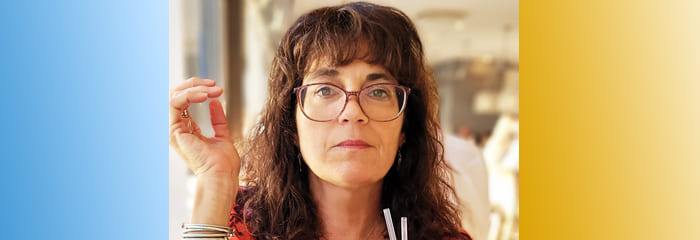


When kitten season arrives, shelters and rescues are pushed to their limits—but you can make a lifesaving difference. This week on Cattitude, Michelle Fern welcomes Deborah Felin-Magaldi of Helen Sanders CatPAWS to share how fostering, Trap-Neuter-Return (TNR), and community involvement are helping save thousands of vulnerable cats and kittens. Deborah explains why fostering isn't as difficult as many people think, how first-time volunteers can get involved, and shares the inspiring story of Benny, a severely abused kitten who found healing, hope, and his forever home. Whether you're an experienced cat lover or simply wondering how you can help, this episode proves that even small acts of kindness can change a cat's life forever.
Listen to Episode #309 Now:
How to Foster Cats & Kittens During Kitten Season
BIO:
Deborah Felin Magaldi is the Director of Helen Sanders CatPAWS, the Helen Sanders Cat Protection and Welfare Society, a nonprofit she helped build from the ground up in 2010. What began as a simple act of compassion, helping a neighbor care for feral cats, evolved into one of Southern California's most responsive and mission-driven cat rescue organizations. With a background in business (BS Psychology and MBA), Deborah brought structure, strategy, and heart to a volunteer-run organization that now operates with annual donations and grants.
Under her leadership, CatPAWS rescues at-risk cats and kittens from public shelters, provides low- and no-cost spay/neuter clinics, runs a nationally recognized DIY Kitten Care Program, and brings comfort to assisted living residents through its Traveling Kitty Comfort and Therapy Show. Serving Long Beach, Orange County, and the surrounding Southern California region, Deborah is guided by one unwavering belief: every cat deserves a full and cherished life, to the level of the organization's capacity.
Transcript:
Hello, feline friends, welcome to Cattitude. I'm your show host, Michelle Fern. And today we have a guest that's going to talk about the topic near and dear to my heart.
And you longtime listeners know what that is. Saving our cats, our kitties, volunteering, fostering, what you can do, why you should do it. And also how she helped start this amazing organization.
So stay tuned, we'll be right back. Welcome back, everyone. I'd like to welcome Deborah Felin-Magaldi.
She is a volunteer with Helen Sanders Cat Paws based in Southern California. You also helped start this organization. Welcome, Deborah.
Well, thank you so very much for having me. I'm very excited to have you. You know, we chatted a bit before the show and I'm, you know, lived in LA for many years.
Now I'm in an even warmer climate. And it has, according to one late night host that I adore, the esteemed, I guess, terminology of the crazy state. So I live in South Florida.
Well, right, right. I guess because there's always something crazy going on here. I don't know.
It's not all political. There's just a lot of crazy. You never know.
Like today, we have a fire in the Everglades. It poured like crazy last week, but the fire is still uncontained. I don't know how that happens during rainy season, but here we go.
I'm so sorry. Yeah. Why do we bring that up? Because warm climates tend to have a lot of stray kitties, not all and stray cats, not only during certain seasonality, but all year long because, you know, it's easier for them to procreate.
You know, they're in the outdoors and all of that. Let's talk before we get started about kitten seasons and everything. Can you share with us, tell us about the Helen Sanders Cat Paws organization? Of course.
Thank you. It was started officially as a non-profit, you know, organized in 501c3 and all that in early 2010. But the roots of the organization go deeper than that to a lady named, predictably, Helen Sanders, who was active in TNR, which is, Trap, Neuter, Return.
Starting back in like the 70s, 80s, before people even knew what TNR meant or Trap, Neuter, Return, she was trapping the stray feral, as they would call at the time, cats at the jetty, in the rocks that jut out into the ocean here. It was just inundated with just stray free-rowing cats and she would trap them, humanely trap them, get them altered, get them vaccinated, and put them back into their rocks habitat and feed them every night. She would take food to them and manage that colony.
She taught other people how to do that. When she passed away in 2005, some friends put together a few underbox just to feed the cats that were still alive at the time of her passing. And then eventually, a few years later, we decided to make it official and organize and start a rescue in her name, honor, and legacy.
One thing that the Helen Sanders Cat Paws organization does that's a little different than some other places, they have a DIY kitten care program. Can you share that with us? Yes. About 10 years ago, we were working with, we actually concentrate, we focus mostly on public shelters and try to take out the cats and kittens that are most at risk of, you know, not making it out alive.
So at the time, one of the shelters that we were working with, they were, unfortunately, just about a thousand kittens a year were not making it out. And typically, kittens under four or five weeks old that weren't yet eating on their own because they require so much care, you know, 24 hours a day, you know, every few hours they have to be fed, right? And shelters are not typically staffed 24 hours. So they were not making it out.
So what we put together was this DIY kitten care kit so that when people came in, you know, just thinking, oh, it's a shelter, I'll bring kittens there. And the shelter would say, you know, we have no one to take care of these kittens. They're not going to make it.
They would be offered a kit of supplies to take the kitten and the supplies and say, here, you take the kitten. Here's some supplies and take care of the kitten. You take the kitten, take care of the kitten or kittens for, you know, a couple weeks, at least until they're eating on their own.
Then you can bring them back even. And then the shelter can handle them better. So it was a way to keep the kittens out of the shelter and engage the community, just members of the public to just be rescuers, you know, and give them the tools, information, the formula, the bottles, the heating pad, whatever they needed to give those kittens a chance to live that they would not have if they entered the shelter system.
I love that. Now we're going to talk a little bit further about kittens because we talk about, well, right now we're recording the show in June, almost July. So kitten season typically runs April through October and people hear kitten season, kitten season.
So my longtime listeners are probably like, yeah, I know what that means, but a lot of people do not. So can you explain to our listening audience, what exactly is kitten season, why it's important and what to look out for? Absolutely. Thank you.
Yeah, kitten season is just way not nearly as cute as it sounds, right? It's that time of year. And you mentioned the April to October time frame, which is probably the heaviest seasons. And what that means is all these kittens and unwanted litters being born that overwhelm shelters, overwhelm rescues.
The kittens are often born, frankly, sick. There's a lot of inbreeding. There's birth defects.
There's a lot of heartbreak involved in it. And in a temperate climate, like we're in, in Southern California, it's almost really year round. It can ebb a little bit during some of the rainy months, chilly, rainy months that pass through winter between November and February, but it never really stops.
I mean, we've seen pregnant cats coming in in January, late January and February. So these kittens are born, they're born outside, people find them, they don't know what to do. They take them to the shelter.
As I mentioned a moment ago, the shelter is often ill-equipped to be able to handle, especially if there's no mom, orphan kittens that need to be fed every few hours. And it's just a lot of tragic, tragic outcomes. And a lot of them don't make it, unfortunately.
It's very sad. I mean, my cats, so Charlotte and Molly are sisters from different misters and different litters. And Molly was actually born on my doorstep in September, almost 10 years ago.
And it was during, which in South Florida, June through November, we have hurricane season. So not only do you have to watch out for the kittens and see where a cat mama has her babies, but you also have to be careful where she might hide them. In one case, because it was raining so bad, she actually hid them up in my spouse's car up near the engine.
So we always talk about, you know, in cooler months to knock on the car, but you have to make sure to be just as tenacious about doing so in the warmer months. They hide under the car, they might go inside the car if it's raining, torrential rains or something. So you have to check all over the place for these, for the kittens.
And yeah, it does, it sounds pretty, ooh, kitten season. But what cats know is that means, uh-oh, where are we putting all the kittens? And then you have the problem too of people adopting and not realizing that cute little kittens become cats, which are also very cute, but they become cats and they become bigger. So something to think about.
One thing I want to talk to you about, because we haven't talked too much about this on Cattitude. Let's talk about fostering, because I think a lot of people misunderstand fostering as an option. And also a lot of people think, well, I'm going to become attached.
How could I ever give that cat up? You know, and while we're talking about it to all my listeners, remember, we're all a little part in our roles to help cats. Sometimes it's talking about things, sometimes it's fostering, sometimes it's just communicating on social media. Whatever your little part is, it's all important in saving them and the goal to drastically cut down on euthanizing and unfortunate deaths because there's accidents too with, you know, cars and so forth.
So tell us about fostering, Debra. Okay, happy to. Fostering is the backbone of our little organization.
We are foster-based, and what that means is we don't have a shelter, you know, a facility per se, where we, you know, stick cats. We have foster care providers who are caring for cats in their own homes. So what fostering provides to a cat, and again, we focus on taking them out of shelters, but other organizations, you know, take in ones from the street, you know, as it were.
But fostering provides to a cat the gift of time, you know, time that they might not get in a shelter, of care, of love, of medical intervention, which is often necessary. A typical scenario for us, for example, would be that we get an urgent call, and this happens like all day, you know, throughout all day, every day, from shelters, you know, we just got in a litter of two-week-old kittens, you know, at the end of the day, if they're not taken out, we're going to euthanize them, right? So we take what we can. If we take those kittens, we get them into foster care.
So fostering directly saves lives by giving cats a chance, giving them that time that they might not otherwise get. Let me ask you about fostering kittens. You have a DIY, so you get calls from shelters, then you have, like, groups of people that volunteer, and do some of them just know how to care for kittens? Do you give them a little, do they have a class? How do they know? Well, a couple, I mean, if we get a call about, like, the one-week-old, two-week-old, even up to three-week-old, I mean, that's a really vulnerable age, and there's not much room for error.
So we fortunately do have some experienced fosters who will immediately take those in. And then we also try to groom some of our other foster care providers that maybe are familiar with taking kittens that are a little bit older, you know, and less time-intensive, ones that perhaps are eating on their own, but we try to mentor them into showing them how to bottle feed, what to look for, how to keep those very, you know, small, fragile, frail kittens that vulnerable age alive. So, and I also have been involved in doing classes even for a local shelter for their own staff and their foster care providers, because one thing I say in those classes is no human was born knowing how to take care of a newborn kitten, right? We all had to learn somewhere and somehow.
The good news is there's a lot more resources online now than there were 20-something years ago when I first started fostering. I mean, you can literally just do an internet search, how do I care for an orphan kitten? I found a kitten, what do I do? You can put that into your browser, and you will get pages and videos about everything, you know, how to feed, what to feed, when to feed. So, that's the good news.
There's just a lot more information out there than there used to be. Which is a good thing for so many reasons. We're going to take a short break.
We'll be right back. Welcome back, everyone. We're talking to Deborah.
She is a volunteer at Helen Sanders Cat Paws. So, we're talking about fosters. So, Deborah, what do you think are some misconceptions people have when they think about fostering? And you foster kittens, but you also foster cats, correct? Yeah.
We actually have foster needs for everything from newborn kittens to cats that have terminal medical diagnoses, to be honest. We've taken in what we call hospice and hospice fostering. So, it kind of runs the gamut.
But I think one of the objections or concerns I hear most often from people is that, oh, I couldn't foster, I couldn't give them up. Which is, I get it, and I hear that, but it also makes me want to just bang my head into the wall. Because like that scenario I just outlined a few minutes ago, I can't give them up versus they're going to die in a shelter.
To me, there's no choice there. I understand. I almost think of it as, you know what, think of it as a guest in your home for a short while.
That's all. And if you can't give the cat up and the cat's able to be adopted, then you just open your arms even wider. And that happens.
And we do have fosters. I've fostered a lot of cats over 22 years or whatever, and I wound up keeping a couple in mostly situations where they had some medical issue and they weren't readily adaptable anyway. And it's like, whatever, they're never leaving, right? And I get that.
And I'm not unsympathetic to that position about getting attached, but like I said, when the choice is if that cat doesn't have a foster, that cat might not have a life, then I think that requires a reframing in the way we think of our role as fosters. And I think of it as maybe a healthcare worker that's working in a rehabilitation facility for someone who's been injured or whatnot. You take care of that person.
You might come really attached. You become really close. You're helping that person, but they're not going to live there.
You're just part of the journey on the way to a life. You're just kind of a way station on the way. You're the bridge between that cat not having a life at all, of that cat's life being ended, and that cat going on to find their eventual home, forever home.
And so I like to think, and then again, it's a little bit of a psychological shift that I think is important for foster care providers to attain, to think of themselves in that way. It's hard not to get attached, especially when you're up night after night with sick kittens and you almost lose them and you're medicating them around the clock and you're feeding them. Of course, you're going to get attached.
My goodness. There's a huge emotional investment. But the goal of all of that is so that they have a life and they get to go on and live it.
Right. And you'll get past it. Most of us, if you're an adult, unfortunately, you've probably lost a life.
It's somebody close to you or a fur at some point, and it's hard. It is really hard. You have your memories and you grow from that, and then keep getting.
That's what I think. But easier said than done. Okay.
What about expenses? Now, CatPaws, do they cover any of the expenses for fostering and how does that work? Yeah, you sit them slowly. And actually, that's one of the really nice things about fostering, with us anyway, and a lot of organizations too. But yeah, we cover everything.
We cover food, we cover any veterinary care that the cat may need, any medications. I mean, most people have some supplies, like the litter box and whatnot, but if they don't, we provide that too. We provide these pop-up canvas play pens for the very small kittens to keep them in a more confined area and make it easier for people to claim, especially when they're very, very little, so that they don't get into things.
We provide whatever tools, supplies, and resources people may need, including support of our more experienced foster team. Okay. And let's talk about what if you want to foster, but you already have cats or dogs in your home? Which is, I think, pretty much all of our fosters already have their own animals, their resident animals.
So, what we require, especially for very small kittens, very, very young, they need to be quarantined somehow for a couple of weeks, because you don't know what they might have. And also, somebody's resident pet might be fine, but might be like a carrier of something and not even know it, but that would be devastating to an undeveloped, one-week-old kitten immune system, right? So, we request that people keep the cats in a separate room, at least initially, for a couple weeks. A bathroom, separate bathroom is great.
And if they do not have an extra room or bathroom, some people just haven't, some of our fosters just have a one-bedroom apartment and one bathroom. That's where that pop-up canvas play pen comes in, which can be found online. And again, we provide them.
And it's essentially folds, it's hard to describe without pictures, but it's just a pop-up play pen with a zip top and mesh sides and a mesh top. And it's easily cleanable. You can put a box, you can put their food.
I mean, some of these are quite big. Some are like four feet across. And you can keep the kittens confined in there and away from the resident pets.
Okay, that's all great ideas. So, before we talk about spay and neutering, which is also offered by CatPaws, let's talk about a story. Do you have a story you can share of a rescue or foster or a cat that found its forever home? Yeah, there's thousands really.
I'm trying to... One that we continue to celebrate is of a cat named Benny, that we named him Benny. His foster named him Benny, actually. And some years back, he was brought into the shelter that we deal with the most by a family member, a grandma, and that was living in the house.
And he had been just terribly, terribly abused by, allegedly, the boyfriend. Her multi-generation house, her daughter's boyfriend, and he had... It's kind of grim, but he had a broken jaw, broken pelvis. He'd had old injuries, and he was only seven months old when she brought him in because she knew that this guy was eventually just gonna kill him.
Let me just say, there's a special place in hell for these people that abuse animals like that. That is just... Well, they abuse kids too, and women, and I mean, we can go on, but a little kitten? Yeah, I mean, entire kittenhood was filled with that kind of terror of being thrown and kicked and in any event. So she, thankfully, the elder matriarch of that family just finally just brought him in.
They knew, I mean, the DA knew, but no one in the household was willing to testify. I'm sure there was... Who knows what kind of threats and violence was being visited upon the human members of that household. So, unfortunately, after months and months and months of holding Benia's evidence and investigating the case, they finally decided they could really no longer successfully prosecute it, but in any event, the shelter stabilized him.
He couldn't walk when he first came in. They did some initial surgery and medical intervention to stabilize him. He was held for, oh, wow, six, eight months, I can't remember, as evidence.
Wait, at the shelter? At the shelter. And as soon as the evidence hold was up and they determined they couldn't do anything more about the prosecution, we took him out. We got him into surgery to help with the pelvic fractures.
We actually had to first take him to a cardiologist because he had a heart murmur that the cardiologist attributed to traumatic chronic stress. Oh, my gosh. Yeah, I mean, they literally broke his heart, right? Yeah.
So, we had to get that checked out before he could undergo surgery. So, in any event, long story, his foster care provider, predictably, right? You know where this is going. She kept him.
She still has him. He's extraordinarily loved. She takes him out in a stroller.
He's well known in the neighborhood. He's actually a very outgoing cat who loves people and loves to be petted and loves to be the center of attention, which, you know, given his history, is, I think, remarkable. And he's kind of our ambassador of resilience and hope and the healing power of love.
That is an incredible story. That's amazing. And we throw a party for him every year.
And it's a birthday party, but it's also just kind of a love your pet party is what we, you know, is to just remind people, you know, it's a fun time. It's a fun afternoon here in the summer. It'll be coming up in a couple months, less than a couple months, actually.
Fun time near the beach, afternoon, you know, raffles, vendors, games, face painting, you know, for kids. It's the whole thing. But there's a serious message underneath it, too, about how to treat your animals and to celebrate overcoming that kind of abuse and trauma.
Well, it's a wonderful story. We have a few minutes. I have a couple more questions.
Now, you have a good spay and neuter program that you have. Cat Paws has a good spay and neuter program. Let's talk about, and it's low cost.
So let's talk about if people don't live in Southern California, what do you suggest to them as far as spay and neuter? I know that there's various places. There's also the Maine Society does offer, some Maine societies do offer low cost. So you have to look around, but what else do you suggest and why is spay and neuter so important? Well, spay and neuter, and we've always promoted spay and neuter.
We used to do vouchers. We came out of the legacy of trap, neuter, return, right? And so we finally put in place a few years ago, our own modest clinic program to help with that effort. But around the country, it's so important for that looping back to the kitten season we talked about, you know, all those homeless litters, what to do with all those kittens, all those kittens that don't survive.
Let's get ahead of that problem. And spay and neuter is foundational to trying to get ahead of and preventing that kind of suffering and needless death. And people might have to do some digging, and it's very location specific what resources are out there.
And they might have to do a little bit of digging on the internet and just that low cost spay, neuter, near knee, or put in their zip code, put in their city, maybe call their local shelter. And if their local shelter doesn't offer anything, they may be able to connect them with organizations, private non-profit organizations that might be able to help them with the cost. Yes, very true.
I actually, for one cat, I couldn't catch that cat. So I found out through some, you know, social media, a cat catcher who kind of like a drop trap or Wile E. Coyote, you know, the coyote. And so it's, yeah, and I thought no way she's going to get this, get this mama cat and to have no more babies, no way she's going to get this cat fixed.
And voila, it's like 20 minutes and very reasonable. It would have been, you know, a tiny savings if I had gone to the Maine Society. A lot of the people that do the special catching, if you can't, that, you know, have special services, their fees are only a tiny bit more than what it might cost for a regular spay and neuter at a clinic that has low cost.
And they have set appointments. So as you might have to wait to get your, you know, kitty spay and neutered at a certain time, they have standing appointments. So, you know, since for my cat, I couldn't catch her not even at a specific time.
You know, if I had to be there Monday at two, I couldn't have her by, you know, say 12 or one o'clock. It was never. So it was a no brainer for me.
I could not catch her. I caught a raccoon twice, baby daddy once, but no. So, but they do wonders.
And I strongly advise looking on social media. One more question. How would people go about starting a foster group? Well, I think it helps to obviously be willing.
It helps to have some funding in place somewhere. It does cost money. I mean, our veterinary expenses is probably our biggest single line item expense.
But if someone doesn't want to, you know, start their own rescue, which is a significant undertaking, they can foster themselves for an organization or a shelter. Shelters and organizations always need fosters. So I would suggest that someone first, if they're interested in the whole fostering experience, first talk to an established organization or to their own local public shelter about fostering to find and do it under the auspice of that organization to learn more about what exactly it is, what it entails.
And then if they want to go on to start their own now foster based rescue, they'll have a better idea of what that really means. Okay. Thank you, Deborah.
And where can listeners find out more about the Helen Sanders Cat Paws? You know, if they're in Southern California, they could volunteer, they could foster, adopt, or even donate. That would be fabulous. It is HelenSandersCatPaws.com. We are in the Long Beach, North Orange County, California area.
Okay, perfect. Thank you so much for coming on Cattitude. We covered a lot.
I just want to thank you for having me on and talking about this important issue and getting out there and saving some lives. I hope you enjoyed this episode of Cattitude. Anytime we're talking about rescue, TNR, adoption, and fostering, TNR, TNR, TNR.
It's just near and dear to my heart. All of my cats found me. At one time, you know, I had five.
Now I have Dennis, Molly, and Charlotte. Dennis was pretty sure he was abandoned because he knew the sound of a refrigerator, and your feral cats or commuting cats don't know the sound of a refrigerator. Charlotte sat out front of my front door for about three months, and she's a misunderstood kitty, but, you know, we have to take care of her.
Molly is the diva that was born right on my doorstep. So, Sammy is in cat heaven. That was her mama and her baby daddy, Jethro, moved on to other places.
And so, thank you for all my cats. Thank you again to Deborah Felin-Magaldi for coming on Cattitude. Thank you listeners for listening to Cattitude all these years.
I so appreciate it. And thank you, of course, to Mark Winter because this would not be the same without the magic of Mark Winter. Thank you, Mark.
And remember, lose the attitude, have Cattitude!