
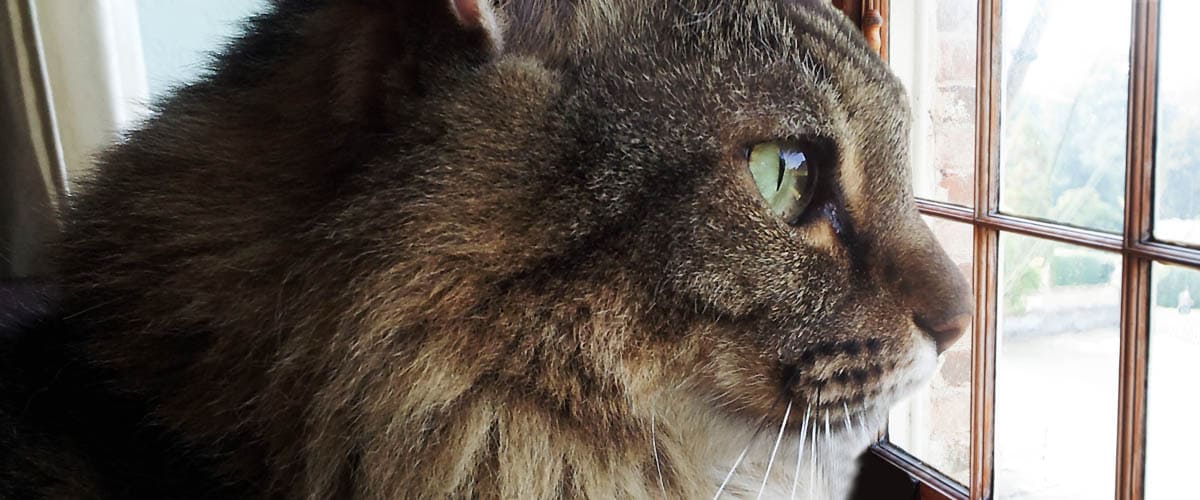
Cats Aren't Small Dogs! A Chef's Recipe for Better Feline Health



This week on Cattitude, Michelle Fern welcomes Chef Scot Hill of Wolf Creek, a professional chef for 35 years who traded the restaurant kitchen for the world of pet wellness—and is now turning his attention to cats with the launch of Feline Foundation. Chef Scot explains why cats aren't simply smaller versions of dogs, from their unique digestive physiology and status as obligate carnivores to their need for animal protein, taurine, proper hydration and feline-specific nutritional support. Michelle and Chef Scot dig into the fascinating connection between gut health and a cat's immune system, skin, coat, behavior and overall wellness, while revealing subtle signs that your cat's digestive system may be out of balance. They also cut through misleading pet-food marketing buzzwords, explain what pet parents should really look for on ingredient labels, and explore why cats may not actually be “finicky” eaters—they may just know more about what they need than we give them credit for! Plus, Chef Scot shares the surprising lessons he's learned by watching animals instinctively select herbs and reveals the mysterious neighborhood “Ghost” who just might turn this lifelong chef into a cat dad. It's a deliciously informative episode that serves up a fresh perspective on what we put in our cats' bowls.
Listen to Episode #312 Now:

Cat Nutrition & Gut Health: What Every Cat Parent Should Know
BIO:
Chef Scot Hill is a former executive chef with over 35 years of experience in fine dining who famously transitioned into the pet wellness industry. Today, he is a Certified Professional Canine Nutritionist and the co-founder and "canine culinary chemist" behind Woof Creek Pet Wellness.
Culinary Background
Before dedicating his career to animals, Chef Scot Hill had a diverse and successful career cooking for humans
Early Roots: Raised in Alabama, his love for cooking was shaped by his mother, grandmother, and aunts.
Fine Dining & Restaurants: He trained at a culinary school in Portland, Oregon. Over his 35+ year career, he worked at prestigious venues like the Governor’s Club in Tallahassee, owned a personal chef business in Atlanta, served as an executive chef in St. Croix for nearly a decade, and worked at Tutto Bene.
Publix Corporate Experience: He spent ten years working as a chef for Publix Super Markets, including their GreenWise stores and cooking schools. Crucially, his final years there were spent at the corporate office collaborating with dietitians and nutritionists to develop clean, nutrient-dense recipes.
The Pandemic Pivot: He and his partner Lisa owned The BrightSide, a cafe and catering company in downtown Tampa, Florida, which was forced to close in 2020 due to the COVID-19 pandemic.
The Shift to Pet Wellness
In 2020, Chef Scot and Lisa adopted a Spoodle puppy named Lily Lou, who developed a severe, chronic allergic cough. Drawing from his extensive background in culinary chemistry and nutritional recipe formulation, Scot began researching advanced canine nutrition.
He began treating food as medicine, realizing that clean, minimally processed, bioavailable ingredients could drastically alter a pet's health span. By creating whole-food toppers and supplements, he successfully healed his dog’s allergies.
This success led to the launch of Woof Creek Pet Wellness. Based out of Riverview, Florida, the company specializes in holistic, integrative-veterinarian-guided supplements and functional treats for dogs and cats.
Their product line focuses on core health support—such as immunity, allergy relief, and foundational Omega-3 fatty acids—using clean ingredients free of synthetic preservatives, binders, or fillers.
Transcript:
Welcome to Cattitude. I'm so glad to have you join me today. I'm your show host, Michelle Fern.
So today's guest is a chef. He was a professional chef for years, and then he decided he needs to make a product for dogs. But yes, you're listening to Cattitude.
But then he found out that cats can use this too. So interesting story, because it doesn't always go that far down to cats, right? So stay tuned. We're going to be right back and I will meet Chef Scot.
Welcome back, everyone. I'd like to welcome Chef Scot to Cattitude. Welcome.
Michelle, thank you so much. I'm super excited to be here. So tell me how this goes to this place, your journey.
You spent more than 30 years as a professional chef, and then you went into pet wellness. So that's an interesting transition. How did it happen? It's a long story and I'll spare you most of it.
But I'll tell you that after cooking for 30 years, 35 years to be exact, we ran up against that little thing called COVID and had a restaurant and that restaurant didn't make it through COVID. And I found myself a chef with idle hands. That is not a good thing to have because we're used to being extremely busy.
And we're also used to helping people and serving people. And I found myself with time again, once again in my life for animals in my life. And that's when our girl, Lily Lu came to us, a Moyan poodle.
And Lily came to us with the standard problems that some dogs, many dogs have, nervousness and tear stains and just all around allergy symptoms and stuff like that. And I started thinking about what's the core, what's the foundation, where do all these things start? And everything I read and everything I was learning just started going back to that foundation of diet and how we feed them. And I wanted to create something for my girl to help her through allergies and through allergy season that would be just an extension of a good diet.
And that's how I started developing our first products. It's interesting how we look at things that so differently than even 10 years ago. We look at our dog's allergies.
Probiotics was a word that nobody used a decade ago. Now we talk about it for our felines and our canines and gut health. So it's good.
It's good that this is happening, especially it's happening for cats, but we're not there yet. So your journey began with your dog who had allergies, Lily. And how did that make you change your mind towards pet nutrition? I know she had allergies and you said it all led to diet.
Well, it made nutrition looking at her and working with her and looking at things through a nutritional biological lens rather than just heating food up and seeing how it changes physically. It made nutrition feel less theoretical. I began to see that what we feed every day can either support the body or continually ask the body to compensate.
And that's what was happening with Lily when she came to us. Her body was asking for compensation. I have, it was screaming out to be balanced.
And that view, that idea changed the way I look at ingredients. It changed the way I think about supplements and it changed the way I think about long-term wellness. And it introduced me to the concept of health span.
We all want a good lifespan and we want our loved ones to be with us as long as they can. But if they're not healthy through that period, no matter how long or how short that is, then we're not doing them a good service. Very interesting.
And just like for humans, you are what you eat. That's it. Goes to our dogs, our cats.
Okay. Tell us about as with your background in food and especially professional chef, which I don't even do the cooking in my house, but I watch a lot of TV shows about cooking and I've worked in restaurants, but not as in the cooking, the front of the house serving and working in the bar. So back in the day, anyways, so my experience is very different than yours.
So how has you as a chef and knowing ingredients and all that, what do you see in the pet food area today that makes you think, wow, even some of this stuff that's supposed to be great for dogs. We're not talking like the mainline kibble, but there's all these raw and specialized food and everything. Is it good or is it just a lot of marketing? Yeah.
I think you're onto something when you talk about the marketing part. My biggest concern is how easily convenience and marketing can take priority over biological appropriateness. A food, it can meet minimum standards.
It still rely heavily on highly processed ingredients, right? Minimum standards. That's the key thing there. The food can meet those standards and it can still have excessive starches and ingredients chosen more for, I don't know, manufacturing efficiency rather than nutritional value.
Most often ingredients are chosen for profit margin. And on the other side of that coin though, is something that not a lot of people think about. The other side of the coin is treating biological appropriateness as an absolute, without considering the individual animal in front of you.
Species matters. It matters that you're looking at a beautiful cat or a beautiful dog, but so does age. So does the health, history, digestion, lifestyle, tolerances, intolerances, and what that particular cat or dog can actually thrive on.
My girls, they eat a 100% raw diet. I've worked with a lot of pet parents that dogs don't fare well on a raw diet. They need a gently cooked diet.
And these things are important. The goal, in my opinion, should not be an ideology. It should be thoughtful, biologically respectful, biologically respectful nutrition, and it's adapted to the animal in front of you, not forced on them.
Okay. Thank you. So Wolf Creek, which is your main company, is launching Feline Foundation.
And this is your first product that's specifically for cats. Now we know on Cattitude, cats are normally thought of as second, even though there's actually more cats out there that have pet parents than dogs, because most people have two or more. I have three, which is actually kind of on the small side to some cat households.
So why was it so important to think about designing for cats? And how is it different than just adapting it for dogs? That's a great question. And for your listeners, I'll tell them one thing that me, even though I own this, what started as a canine-centric company and has now, we're moving out into the feline world. I grew up with cats.
There was always a cat in my household, and usually it was a lot more than one. So right now we don't have cats around and I miss them. I miss them a lot, but cats, they're just not smaller dogs.
And I can tell you that from observation, from relationships I've had with cats growing up, they have different nutritional needs, a different digestive physiology, different taste preferences, and they have a much lower tolerance for ingredients that don't make sense to them biologically. We built our first cat product, the Feline Foundation, and hopefully it'll be the first of many. From the beginning around cats, we just didn't build a product and say, you know what, this happens to be good for cats too.
We built this around the feline digestion system, and it's taken us about three years to bring it to market, including palatability, protein-based ingredients, digestive support, feline-specific probiotic strains. It's all geared toward just that wonderful cat is what it's for. You know what, thank you, Chef Scot.
One of the things, and we've talked about this on the show before, hopefully I'm remembering it correctly, that we know cats aren't just picky eaters, they're different than dogs, for example. Dogs, I believe, can be vegan, although it's not that good for them, but cats cannot. No.
Absolutely cannot, because it affects something in their digestive system, so it can be fatal for your cat. Plus, I don't think people should put whatever your views are for your dog. You have to manage how your dog eats.
They're different, and your cat are different than humans. They have a different... Biologically, we are different. So what is it besides that difference, which is huge, I think, what are the other differences between cats and dogs? What makes it that much more difficult to design something just for cats? I've noticed that cats are marketed as being finicky, and that's really a bad rap they get.
Their bodies are designed completely differently. They're designed around animal protein, like we just said, for being obligate carnivores, proteins and fat. Those very unique nutritional requirements, including their lack of ability to manufacture taurine and some of the fatty acids.
Unlike dogs, cats can't even manufacture some of this stuff. They also process carbohydrates very differently. What we don't consider, what we think is finicky, is really cats being very cautious about what they're eating, being very mindful about what they're eating.
They're a bit neophobic. They don't like a lot of change. People say, well, Curiosity killed the cat.
They're always exploring. I said, no, cats aren't always exploring. They're always on the watch out.
They want to investigate what might be in their area to see what's happening in their environment. One thing that gets forgotten about cats is cats don't spend a lot of time at the water bowl. They need hydration in their food.
We have to really consider that because a cat can easily dehydrate because they don't self-hydrate as often as a dog might be. We hear a dog lapping at a bowl all the time. That sounds normal to us.
If a cat's drinking a lot of water, there might be something going on. Their behaviors are very different. Cats like certain amino acids.
They love the smells and aroma of certain proteins. They like food to be relatively the same temperature every time they eat it. Is that finicky? That's just them being cautious, making sure that they're getting exactly what they need in their diet.
I don't know. I could go for hours on this. I think they fascinate me.
Well, I have more questions, but we're going to take a short break, so we'll be right back. Welcome back, everyone. We're talking to Chef Scot.
His company, Wolf Creek, is launching Feline Foundation. We're talking about gut health and digestive systems and all this great stuff you need to know about your cat. Chef Scot, what are some subtle signs that pet parents can look out for that might show that their cat's digestive system is out of balance? Okay.
Yeah, that's a good question. Changes in stool consistency. Strong stool odor is number one, right? You'll notice that before you see it.
More frequent hairballs, something out of the ordinary. That's just one of those things that's going to be, okay, I know my cat in front of me. My cat's a frequent hairballer.
Or you know by observation that something's different. Vomiting gas, reduced appetite. A lot of these are the basic signs that we would look at.
And then there's also some subtle things, you know, the excessive grooming, inconsistent litter box habits, right? That can also be a clue. My cat usually goes to the litter box a certain time of day and all of a sudden it's not happening or it's happening more often. You know, none of these specifically automatically mean the gut is the cause.
We don't really know always what the cause is. That's why we have to be very vigilant and observant. But these are signs worth observing and discussing, you know, with your veterinarian or something that persists.
Cats can be elusive. So my girls, my dogs, they're pretty obvious when something's going on with them. But every cat I've had, I got to pay attention, you know, got to pay really close attention.
Yes, you do. Otherwise, you might get swiped. Yes.
And it's not a negative thing. It's just that's their way of saying enough, but they have sharp claws, you know? That's right. I've learned.
I was first a dog person, so I had to learn my cats that have all adopted me. Okay, so digestion and improve gut health. How else can, you know, the right food help the cat's immune system and maybe their skin and coat and energy levels? I know you're a chef, so we're going from a chef viewpoint, not like a veterinary viewpoint.
But I'm a big believer in you are what we eat. I'm not perfect, but, you know, I try to eat clean. So how important is all of that for our cats and seeing it in the subtle areas like their coat and their activity level? Gut health, right? And how we've heard about all these axes, the XI of gut health, and we're learning that gut health can, and this is very important for cats, directly affect kidney health and brain health and therefore behavior, you know? And I believe that it all goes the other way.
If you live in a tumultuous environment and you haven't built a great environment for your cat, then you might affect gut health in the reverse direction, right? Behavior goes inward and behavior goes outward. The gut communicates to the immune system and the gut communicates to the nervous system and it plays a major role in nutrient absorption. Digestive health can influence immune balance, skin, coat, like you said.
And I'm a huge believer that the gut balance can influence stress response. And that's why it's so important to be observant of your cat's diet and understand that though they might be eating, are they absorbing all that nutrition? Are they getting everything in there to not just have a balanced diet or balanced gut, but a balanced life? Okay, thank you. So there's a lot of, we talked about this earlier in the first half about marketing, and there's a lot of claims on labels that people can be fooled by.
I kind of think of it as, you know, all natural when they talk about that on packaging for like humans, all natural. It doesn't, sugar's natural, shouldn't have a lot of sugar, salt is natural, shouldn't have a lot of salt. Cobra venom, cobra venom is natural.
It's also natural. See, and cobra venom, right? So there's all this kind of stuff that is, you know, all natural and they could use that all natural for pets too. So that's one of the ways I think that you see food and you kind of like, you know, you're lured by what the labeling and says, what else should pet parents watch out for? That's good.
And believe me, I use the word natural, but we also like to carry it a little deeper and explain it. I would start if I'm picking up a new product, say food or something like that, I do like many pet parents do and just flip it around and look at the actual ingredient list and not the front of the package first and skip past the buzzwords like natural and complete and these things and look for clearly named animal proteins, appropriate fat sources that we minimally, minimal unnecessary starches. And I also look for a transparency of what each ingredient provides, you know, and sometimes I have to do the extra work to see what all these ingredients provide, especially if I'm looking at a, at a supplement or something, I want to know if everything in there is 100% functional or are there things in this product that I'm looking at that are what we call carriers or filler, you know, things like dextrose or, or rice whole, you know, we don't really need those probiotics are often on labels.
And that way, when that happens, I look for strains rather than the word probiotic. I want to see what strains are going in there and how deep that information goes. Can I find out where those strains are from? You know, things I'd be cautious about is vague terms like premium, holistic, like we said, natural, human grade, vet formulated.
I wouldn't take those on just on face value. I want to know, well, what does that mean? What are they trying to designate? Those phrases can sound impressive without telling, telling you much about the sourcing, the processing portion sizes and nutritional value. This has been very informative.
So let's talk about, I think this is amazing. So you have your animals self, your fur babes self-select herbs. How do you do that? And how did their experience, did that teach you more about nutrition and what should go into your product? Did they just sniff one and like it? Yeah.
Like I don't like cilantro. So I don't even know if you can smell it, but I do not like it. And it doesn't taste like soap.
I just don't like it. Cilantro is a love or hate relationship for almost everyone. And that's an enzymatic reaction.
And that's another, that's another podcast. Lily and Layla, when they get acid reflex or their stomachs aren't doing well, they tend to look for something herbaceous, usually a grass. Lily selects clover, rye grass, or tall fescue.
Why? I'm not quite sure, but I see her selecting those. Layla enjoys dill. She also enjoys chervil and lettuce greens, but not as a regular part of their diet.
Any other day I can put that right on top of their food and they will not eat it. They'll eat around it. But when they're feeling a certain way, they know what they're looking for.
And I did that by just experimenting. I discovered it because I have a hydroponic wall in my house, a little system that I grow lettuces and herbs on. And I kept walking by and my dill plant was always out on the floor.
And I finally found that Layla enjoyed dill when she wasn't feeling well. So I, the whole bottom rack of that now is all dill. You know what? I got to interrupt something.
That's interesting because, you know, there's that old chicken soup is good for you. And I've always had it and it always has dill in it. Maybe it's just how I made it, but interesting.
It's an incredibly nutritious herb. Why she flocks to it? I really don't know, but I just know that, you know, I'm cognizant of what's growing in their area. You know, especially when we're out in the yard and they're walking around, I'm cognizant of what's growing there.
And I have a little app on my phone where I can look up plants. Is this toxic to my babies or is it not toxic to my babies? You know, and I'll check everything. If it's toxic, we pull it out and not toxic.
They're free to enjoy it and check it out. It's something that happens to them naturally. I've seen cats do it.
Cats obviously love catnip. Cats also, I've seen, I've had cats that enjoy basil and different types of basil. Thai basil is one that my cats used to enjoy.
And always in the winter months, if I don't have enough grass out in the yard, I'll grow some rye or some wheatgrass inside so that they can select it. So what about knowing which herbs are not good for your cats? It's very important. You know, I just encourage you to get a good book, do some research and make sure that you're well-versed in what plants are good and what plants aren't good.
Most cats are going to be pretty smart and instinctual and not gravitate towards something that's not good for them. But I wouldn't rely on that alone. You know, I would want to make sure I know what's growing in my area.
And you can also just grow a little garden for your cat and make sure it's in their pathway. Make sure they get to walk by it daily. Okay.
Thank you. You also want to be, you know, have sustainability as part of your mission. Tell us about that.
It's really important to us and sustainability, that's a big word. And it's another one of those buzzwords that you'll see on some packaging or on a seal on a package. And for us, we visit that in many different ways.
Our supplements come in little tin cans, not in plastic. And boy, does that make manufacturing difficult for us, but we will not compromise. We have, instead of plastic scoops, we have wooden scoops, you know, little bamboo spoons that go into our products.
Anything that's liquid that we produce goes into a glass bottle. And we like that for a couple of reasons, the sustainability, the recyclability, and also the inert nature of glass. There's no forever chemicals involved in that, in the glass.
And all the way down to how I source ingredients and materials for all my products and the fish that go into making the omega fatty acids. Everything is sustainably certified. We're very careful about where we source everything from.
We buy organic when we can. Also, case in point, our salmon oil, we have a salmon and hemp seed oil. That, we were out of that for over a year because the harvest was bad and we could have still bought it, but we knew that the salmon harvest was not up to par and that that system in Alaska was being stressed.
So, we stepped away from it for a year. It's just really important to us. I'm glad to hear that.
Really important. So, with the launch of Feline Foundation, I want to know what you hope, you know, cat parents notice, you know, once they start using the products. And also, does that mean you might be, you know, a cat parent soon yourself? So, you have a cat tester? I'm on the lookout for sure.
There's one little, and I'll answer your question in a second. There's one little cat in my neighborhood and I call her ghost because she's, I don't know where she came from. She's a little white cat and she crawls up out of the drain.
She goes from the pond up the drain up to the street. I know she's just out there. And when I go and try to find her, I can't find her.
So, I've called her ghost, but I would happily adopt ghost if I can find her. But we're definitely looking for a cat. These two girls I have here, I have to be very careful because I need to explain to them the difference between rabbits, squirrels, and cats.
Right now, everything with four legs, they want to chase. And what was the first part of your question? So, Chef Scot, what excites you the most about the launch of the Feline Foundation? And what do you hope cat parents notice once they start using the products? I'll tell you what I know they're going to notice. They're going to notice that Wolf Creek has some of the most caring and wonderful customer service people that you will ever, ever come across.
Meaning you can reach out to us and ask questions about our products before you even buy them. We want to know about your pet so that we can explain whether or not this Feline Foundation is right for you. We're very excited about what we expect to be a very positive reaction to it because we're doing something that is cat specific that has a lot of thought and research behind it.
And I'm hoping that what it will do for cats and cat parents is just, I don't want people to take a product and see a major noticeable difference. I want people to use my product and see my cat's just doing great and my cat's continuing to do great. This product will help with gut balance and stool quality and overall wellness.
And we're just excited to be part of this community and really want to dive in as deep as we can. Cats are amazing, truly amazing. And I don't have to tell your community that.
They are, you said it earlier, their cats are not small dogs. We've talked about that on this show so many times. I still think it's wild how much their DNA represents.
Is it 95% tigers or lions? And there's a lot of that. If you watch them, they have those mannerisms from the little I've seen up close with tigers and lions. I think they do.
And we recognize that. What we're producing, it does have probiotics in it, but these are not just regular probiotics. They actually are passed through wild Canadian cougars.
So they're species specific and it's not a huge probiotic load. That's not what we're going for. We want just enough probiotics for daily use.
And yeah, cats, man, cats. Yeah, I got to get a cat, Michelle. You got to get a cat.
Yeah. It's going to happen soon. I promise it's going to happen soon.
Yep. And so finally, where can our listeners learn more about Wolf Creek and especially follow the launch of Feline Foundation? Oh, great. Wolfcreek.com, W-O-O-F-C-R-E-E-K.com. And on there, you'll see, click on the resources tab before you even do any shopping.
Just click on the resources tab and go to the Wolf Companion. You're going to find a bunch of blogs about cats on there. We just did a bunch of research.
Our head of research, Kay Stewart, did some great research on cats and wrote some wonderful blogs. So there's a lot of good resources in there, not just for dog parents, but cat parents too. Chef Scot, thank you so much for being on Cattitude.
Absolutely. My pleasure. I hope you all enjoyed this show.
I certainly did. It's eye-opening when you're talking to someone who's creating a product and their background is of a chef. Chef Scot was a professional chef for 35 years and has come out with some great products for cats.
So check out Feline Foundation and Wolf Creek. So thank you, Chef Scot, for coming on Cattitude. Thanks to my cat crew, Dennis, Charlotte, and Molly that have taught me so much more than just about cats.
Thank you to my listening audience. Thank you for listening, for sending suggestions, for reaching out. You can reach out to me at michelle.petliferadio.com. And, of course, the show would not be the same without the magic of my producer.
Thank you, Mark Winter, for all you do. And hey, remember, lose the attitude, have Cattitude.