
Saved from Euthanasia: The Remarkable Rescue That Gave Austin a Second Chance
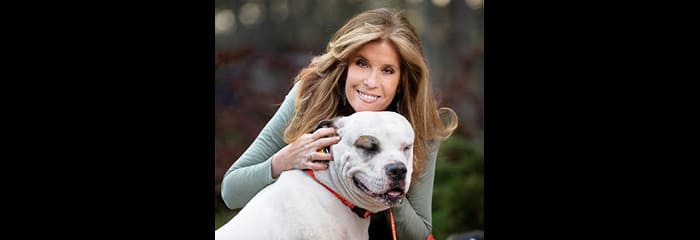


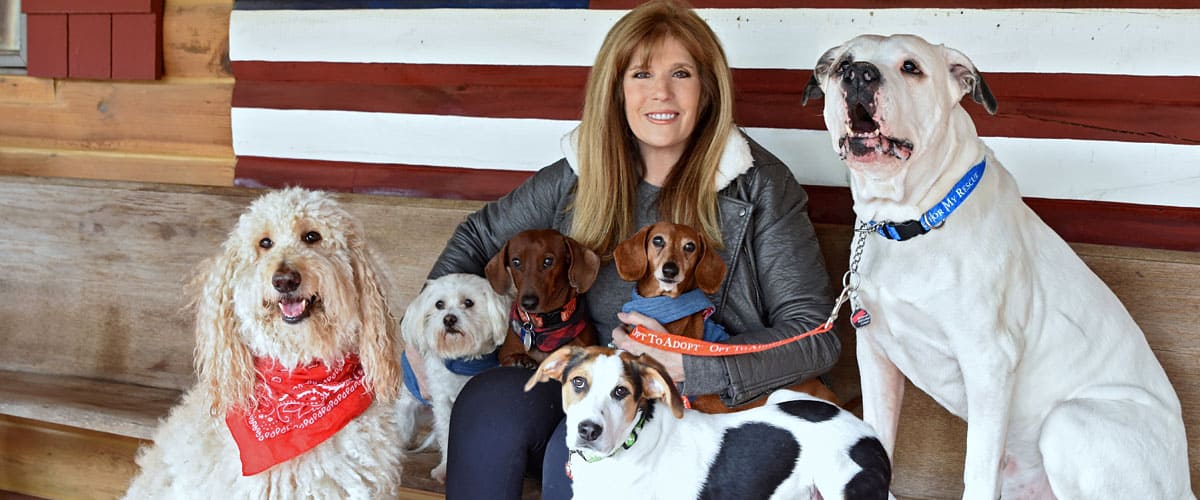
Jill Rappaport shares the remarkable story of Austin, a 90-pound shelter dog with a bite history who was less than 24 hours away from being euthanized—until one extraordinary animal rescuer agreed to give him a second chance.
After desperately reaching out to shelters and rescue organizations with nowhere left to turn, Jill contacted longtime animal advocate Whitney Knowlton Lowery, founder of Last Chance Animal Rescue and St. Francis Farm Animal Sanctuary. Despite Austin's complicated history, Whitney said yes. Austin was transported from New York to the sanctuary in South Carolina, where months later he's thriving, losing weight, off his medications and has had no further bite incidents.
Whitney takes Jill inside the unusual mission of St. Francis Farm, a sanctuary created for dogs and cats that traditional shelters and rescues often cannot place. She also tackles the controversial issue of behavioral euthanasia and explains why many so-called “bad dogs” may simply need their individual boundaries, behaviors and environments to be better understood and managed.
With approximately 150 dogs and 75 cats in its care, St. Francis Farm provides a permanent refuge for animals society has often given up on.
Plus, cat correspondent Deborah Cribbs visits the kitten nursery at the SPCA Cincinnati to highlight the special care given to vulnerable kittens waiting for forever homes.
It's an emotional and thought-provoking story about behavioral euthanasia, difficult-to-place dogs, animal sanctuaries and what can happen when someone refuses to give up on an animal—because sometimes a second chance is all it takes to save a life.
Ways to donate to Last Chance Animal Rescue and St. Francis Farm.
Venmo - https://venmo.com/u/lcarescue
Paypal - https://www.paypal.com/paypalme/lcarescue
Givebutter - https://givebutter.com/LCARescue
Checks - St Francis Farm 477 Edwards Rd Carlisle SC 29031
*Create your own fundraiser to support us for your birthday or other occasions.
https://www.facebook.com/fund/LCARescue/
Listen to Episode #74 Now:
BIO:
Founded by Whitney Knowlton in 2008, Last Chance Animal Rescue is a 100% volunteer nonprofit and our focus is to rescue animals located in "KILL" facilities trapped on death row in rural shelters still using inhumane methods of killing such as gas chambers or heart stick.
Millions of pets are unnecessarily euthanized each year in the United States. LCAR is working to change the way shelters treat these precious animals so that this senseless loss and incredible cruelty can one day end. These animals are highly adoptable and die each day because of legislative deficits, lack of resources and limited chances of local adoption. We rescue regardless of age, breed or general health, trying to save as many as we can from death by underwriting the cost of relocating to "NO KILL" facilities and foster homes while finding the adoptive furever families that they all deserve. We network with other rescue organizations to transfer animals from our shelter partners into adoption programs and to educate shelters on reform and assist them in achieving “NO KILL” regardless of current legislation. To date, LCAR has rescued thousands of animals and is growing everyday thanks to the support of our volunteers, fosters, adopters, donors and sponsors. Last Chance Animal Rescue’s mission is to save the lives of loving animals while creating opportunities for long-term relationships between people and animals.
Transcript:
Hi, I'm Jill Rappaport, and welcome to Rappaport to the Rescue. My guest today is truly an angel and a lifesaver in every sense of the word. She saved a dog for me, literally on the brink of death, an animal that was going to be euthanized in the next 24 hours, and I was frantically reaching out to every person I know in animal welfare, begging and pleading, but it was a tough ask.
This is a middle-aged dog, a large dog, about 90 pounds, who had a bite history. I had worked with this dog for over the last two years, and he never showed me any aggression. He only showed me love.
But then it was deemed he should be euthanized, and I just couldn't allow that. I couldn't believe that that could happen, and I was going to do anything in my power to change that narrative for this dog. Well, fast forward, I reached out to my old pal, Whitney Knowlton Lowery, who I've known for decades, who is the founder and creator of Last Chance Animal Rescue and St. Francis Farm Animal Sanctuary, and I told her the scenario.
I told her all about his history, and she said, we will take him. We will pick him up, and we will take him. And I can't even put into words what this means to me, knowing that this dog has a second chance for a new life at her sanctuary.
And so far, so good. He's doing great. And when we come back, we're going to check in with this amazing woman who has countless animals that society gave up on, but not Whitney Knowlton Lowery.
Stay tuned. Welcome back to Rappaport to the Rescue. I'm Jill Rappaport.
You heard in my intro, I refer to this woman as an angel, and I don't say that lightly. Whitney Knowlton Lowery literally saved a life in the nick of time. This was a dog that had less than a day to live.
I reached out to every person I know. I called everybody I've ever worked with in animal rescue, and I said, look, I've got this dog. Yes.
He's middle-aged. Okay. He's big, over 90 pounds.
Okay. And he has a bite history. Dead air.
Paws. Everybody said to me, we just can't do that. It's too much of a liability.
And I understood that because most rescues, shelters, how would you take a dog like that and put him into someone else's home? But I was hoping they could say we have a facility that we could keep him. We have a sanctuary. I was just not getting anywhere with anybody.
And then, thanks to a mutual dear friend of ours from Pilots and Paws, the wonderful Debbie Boyes, she said, why don't you reach out to Whitney? And the light bulb moment went off, and I reached out, I sent her all my information on this dog. Whitney, you were a little concerned, but you came through. And because of what you did, Austin is living his best life, and I cannot even thank you enough.
Well, how do you say no to Jill? Number one. You know. She's a little bit on the persuasive side.
I'll never understand the killing of dogs just because of a bite history. I mean, dogs have big teeth, and they're animals. We just somehow are losing the idea that these are animals.
I'm not a big proponent of behavioral euthanasia. I think it's the easy way out. Whitney, you came through for me when I had no options.
Oh, well, it's what I do, right? I mean, I don't think of myself as an angel. I think of myself as a pretty practical person. And I just don't believe in killing dogs.
And quite frankly, I think most people don't, but they'll do it because it's easier. But for me, it's not an option. It goes against just everything I believe.
I believe dogs are so much more like us, better than us in most ways. But like with Austin, or I can think of a handful of other dogs that have what I'll call owners attached to them. They're always asking me, well, how are you going to fix them? You're not going to fix them.
They are who they are. These animals have huge personalities, and sometimes those huge personalities are not very attractive. But that doesn't mean that they shouldn't be entitled to their life.
Amen. So, you know, I feel like we need to spend more time just getting to know them and figuring out what their boundaries are and how to manage them best. None of these animals are like unmanageable.
If they're unmanageable, that's a whole different story. But most of them are very, very manageable. You just have to know where their boundaries are.
And, you know, it's so interesting that you said this, Whitney, because I was reaching out to shelters, and the minute they heard bite history, mind you, this is a dog that I've been doing videos with for two years. But once they heard that, there was no way they could take the dog. And I understand that.
I get the legalities. I totally agreed with them that I get that you can't put them up for adoption and you can't therefore take them into your shelter. The problem is, where are our options? Because of your amazing organization, which is called St. Francis Farm Animal Sanctuary, you have created a safe haven for these animals that society has given up on.
But you're one of the few. Yes, very few. I'm really not sure how many there are, but I would say there's less than a dozen, less than 10 in this country.
I don't understand it. I mean, I get people, and I would have said the same thing to you when I first got into rescue, like, who wants a dog that bites? Why would anybody keep around a dog that bites? But I think that the more dogs I've gotten to know and the more I've gotten to know about dogs, I realized that most of these dogs aren't bad dogs. They just have very peculiar needs.
And most of them probably could be placed in a home, except for we don't have enough homes with smart people, right? Most people just, they can't quite figure out how to manage a dog like this. You know, if a dog doesn't like strangers, well, then you don't take it out into public. If a dog doesn't like other dogs, then you don't take it to dog parks.
It's just management. There's nothing more than that. It's not modification.
This isn't changing their behavior, changing the way these dogs think or react or behave. It's literally just managing them. You know, St. Francis Farm, we have a nice setup.
We're kind of out in the middle of nowhere. We don't have children running around. It's a nice environment where dogs can be dogs.
And I think that's important. Like I said earlier, you know, I think we have just really forgotten that these are animals. And it's more than just a nice, safe environment.
You have a beautiful facility there with rolling acres. And I got to meet the transport team. I was blown away by them.
The dog that I was giving to you had the whole van to himself, the air conditioning on. They also brought him a fan. He had two of the kindest drivers.
One was a vet tech and the driver that truly cared. Do you know they sent me three videos during the course of the trip from New York to South Carolina to update me, to show me that this dog was doing OK? It's incredible the devotion and the commitment your staff has and what you've created there, Whitney. Oh, thanks, Jill.
I appreciate that recognition. It's certainly been a long haul. The rescue has been in operation since, I think, 2008 or nine.
And the sanctuary we bought in 2013, so 12 years. And it's been a long 12 years. You know, we're not a rich organization.
We don't have, you know, a wealthy philanthropist behind us. It's me and I'm just a girl who likes dogs. It's an understatement.
I mean, really. So it's rough. It's hard to wear so many different hats all the time, you know, trying to figure out how to pay for everything, trying to figure out what to do about this particular situation with this particular dog.
And I mean, there's just so many different moving parts and always trying to figure out how to make everything optimal. It can really be exhausting. And so expensive.
I want our listeners to understand. You said that there's probably less than 10 of these sanctuaries. And I know for a fact, some of them aren't nearly as nice as yours.
You know, people really need to understand. It's not a Canyon Ranch spa. You know, a lot of these sanctuaries, you're happy the animals are living, but they're not optimum always.
Right, Whitney? And so it's really a frustrating situation when you have an animal that might not be right for somebody's pet or to be in a home, but you want them to live. But we also want them to have a quality of life, which is what you're giving them. How many animals do you have at your sanctuary now? On average, we house about 150 dogs, which is probably where we sit about right now.
And then we have about 75 cats. The dogs, they require a lot. We obviously staff the farm 24 seven.
So it's, you know, it's not a proposition that you can just, you can't shelve them. Right. You can't say, oh, well, it's Thanksgiving.
We're going to just shelf everything for the day. I mean, the show goes on, as they say, right? You, you have to keep things going day in and day out. And it's expensive.
I think staffing is for sure our biggest expense, but we, we rely on staff. We can't rely on volunteers who may or may not show up. You know, the dogs require what they require and it has to get done.
So I think staffing would be our greatest expense. Food and medical care will probably be our second greatest expense. But, you know, when you talk about quality, there's so many different levels to quality.
And I think one thing we, we, I try not to do is really, you know, that big old word anthropomorphize the situation with dogs because dogs aren't people. So they don't care what color the walls are painted. They don't care if you give them a plaid bed or a purple bed, you know, the dogs, they want to be outdoors.
They want to run, they want fresh air. They want food and they want consistency. And that's what we try to provide them with a clean, safe environment where they can be dogs.
We don't put a lot of pressure on them to be a member of a household. You were very honest with me. Quality is subjective, I guess.
It is not fancy by any stretch of the imagination. I've seen fancier places, but I think it's clean and I think the dogs get what they need and I think they're happy. Genuinely, I think they're happy.
Which is all that you can ask for. Yeah, it's expensive. You know, we're in one of the cheapest areas in the country, which has always worked to our benefit.
And what town is it, Whitney? We're in a area, Jill. We're in an area called Carlisle. People always ask what city or town is it? And I'm like, there is no city.
There is no town. There's no stoplight. There's not even a blinking light.
We're in an area. But we're just inside the Sumter National Park. So it's really, really beautiful.
It's very, very rural. You know, staffing has been difficult because of the area that we're in, but I have a great staff right now, which I'm very, very grateful for. And yeah, it's awesome.
I love it. And is South Carolina the good news, especially for my doggie that I sent there, not my personal dog, but the dog that needed to get a home because of a permanent life home, he's got great weather most of the year, you know, you have nice winters in South Carolina. It is true.
We have a very temperate climate. We're in the upstate of South Carolina and it's, it's absolutely beautiful. I love it.
I love it here. Well, you know, I know you're very modest and understated about what you do. And I never realized how important the work you do until I was in a desperate search to save Austin.
And you said to me something that really resonated and I'll never forget. You said, you don't know what switch he has or has had in the past to go off to make him do what he did in the past. So knowing that you said to me, he's probably not going to be a candidate to put in, you know, someone's home, but he will have the best home here with me if we deem that.
And I have to say to our listeners, you sent me a video and I could not believe how great Austin looked. He lost weight. You told me, and I hope this is still the case, Whitney.
He's off all his meds and up to now, and it's been four months. Can you still tell me that he has not had a bite incident? No, he has not had a bite incident and I don't suspect he will. He really is doing great.
You know, we're in such a low pressure environment for him. Austin is a hound mix and I would venture to guess before he somehow got to South Hampton, he was just some dude's dog who probably hung out in the garage or the shop or around the yard, maybe in the back of his hunting truck or, you know, really, if you think about that, very low pressure, right? Just being a dude. And then you take him and you try to force him into a house, maybe with kids and there's food everywhere, and he doesn't really know what to do with himself.
And I think now being back in this environment where he can just be a dog and hang out, he's relaxed. He was extremely overweight when he got to us. He has lost some weight, not enough.
And, you know, I keep going back to money. I wish we had more money. I'd love to have more handlers.
I'd love to have more people who could come in and do more things with these dogs, but, you know, we're lucky right now if we can afford the basics and that's a poopy place to be, honestly. Well, pun intended. And I'll tell you, Whitney, in the six years I've been doing this podcast, it's very heavily celebrity-based and news-breaking issue-based.
This was a story, and the first time I've ever featured a sanctuary or even focused on just one organization, because I believe in you so much and I wanted our listeners to understand the God's work you are doing, you and your staff. Every dog is different. Every dog is its own dog and has its own history.
Not all of them have bite histories. Some of them are just really high anxiety and, you know, tried the whole foster home thing and down came all the curtains and the window treatments or ate holes in sheetrock and, you know, can't live inside a house. There's so many different reasons.
I mean, I could go dog by dog and explain each and every one of them, but the important part is, is that we created a solution where most rescues or shelters, they don't have the solution. The solution is euthanasia and that's not our solution. And while the sanctuary is a ton of work and requires a ton of money, I think it's also the thing that people who are involved with the organization are the most proud of.
It's just that thing that separates us from the rest. I know for me, dealing with dogs that nobody else wants, nobody else will touch, nobody else can handle. I mean, maybe it's just a little boost to my ego, but it's my preference.
I don't want to deal with the puppies or the purebreds, or I like the difficult ones. I like the challenge. I like trying to understand them and figure out how we can all get along.
That is so beautifully put, Whitney, and you've done something to try to get to a solution for the ones that nobody wants. And you're doing it. You're taking them in and you know they wouldn't be on this earth if it wasn't for you and your organization.
And do you know how many times I've talked to somebody who has tried to describe a dog who has problems? And I'm listening to them and I'm thinking to myself, it's no wonder this dog is so racked up out of its mind. Like, listen to this lady go on and on. And then I say, well, I'll take the dog.
It's fine. Let me take the dog. And the dog is nothing as they've described.
And so much of what I experience with dogs is relational. Like it's my relationship with one dog is completely different than someone else's relationship with the same dog. You know, they see us and view us and judge us just like we do each other.
So my relationship with a dog can be one way completely. And then somebody else will say, that dog is so out of control. And I'm like, out of control? I've never seen it out of control, but it's my energy the animal's responding to.
And that just shows you that these animals, you know, in the right hands, they can thrive. Absolutely. And when you think about the numbers of truly wonderful animals that don't get a chance to live because they weren't put in the right hands, they're literally judged by their worst moment in time.
Even, and most of the time, it's just one bite. That's the threshold. It's one bite, kill the dog.
I can't imagine living up to those expectations, like, and being judged by the worst thing you've ever done. I find it just incredibly unfair. And I think people really, really struggle with the euthanasia part in these types of situations, because really, truly, they know it's wrong.
If it wasn't so wrong, you wouldn't feel so bad about it. Thanks to people like you. And Whitney, honestly, I know you have second chance animal rescue with viable, wonderful dogs of all ages and cats.
But the fact that you had the wherewithal to say, no, all these animals are getting killed. I have to be able to help those too. And you opened up this one of a kind sanctuary is just amazing.
You know, the sanctuary was a byproduct of the adoption program. If I'm being honest, you know, I lived in New York and the Hamptons and had a tiny little house, you know, a little postage stamp house. And when a dog got to the end of the line and everybody said, I'm not taking that dog, not for me, no way, not happening.
It growls when food is around or whatever the problem is. I'd have to be the one to take the dog, right? The buck stops with me. And I ended up with so many dogs that nobody would touch.
And they became my dogs. And I wouldn't ever think about killing them. I just know how to manage their problems.
And so here I have all these dogs and I'm thinking like, this can't, this isn't sustainable, right? These dogs aren't living two years. They're living, you know, 15, 16 years. I've got to figure something else out.
And that's where the sanctuary came in. And I had no money and had to figure out, you know, how I was going to build something on the cheap and quick. And, and that's what we did.
I mean, we bought a 50 acre, 200 year old big farmhouse in the middle of the Sumter National Park for $125,000. That was the initial investment. Who does that? Who can do that? You, just tell our listeners what people can do to make a difference for you so you can continue your mission of the heart to save all of these animals.
Oh, well, we're, you know, we're definitely in need of funds right now. We're dry. We've let ourselves dry.
And where can people donate? Uh, you can go to our website. It's lcarescue.org. It's last chance animal rescue. So it's lcarescue.org. We've got wishlists on Amazon and I think even Walmart.
From the beginning, I've kind of been like a proponent of people doing things on their own. So, you know, the Hamptons, I always said, you guys are going to have a huge party at your house this summer, instead of it being for nothing, why don't you make it for the rescue and invite all your friends over for that big barbecue like you do every July and have them bring a check for 50 bucks. And that's how we started with fundraising.
Now we have, you know, one fundraiser, our golf tournament in July. But all of our other funding really comes through social media posts and our adoption fees. That really fuels the costs of the sanctuary.
And of course, what it costs us to take the dogs from unadoptable to adoptable for the adoption program, but they can do their own canned food drive. I mean, that that's great. And we have a van in New York a couple of times a month that picks up donations and brings it back down to us.
Blanket drive, towel drive. You're welcome. Anybody's always welcome to come to the farm and, and see the animals, meet the animals, spend time with them.
You'll see that they're great animals. They just have made a mistake somewhere along the way. We have adoption events in New York.
The event calendar is on our website. It's also on our Facebook page. You can get involved, you can be a volunteer, you can help us screen applications for adopters.
We do all kinds of outreach and advocacy type events where you just sit at a table and talk to people about the work we do. And there's just a million different opportunities. And it requires a lot of people to get involved and be excited and do something.
The animals are counting on us. Look at all these animals that are thriving now that wouldn't be here. And it's only, it's only about to get worse.
You know, it's really only about to get worse. The economy's in such a bad place. People are going to lose their benefits down here, you know, in South Carolina.
People rely on, you know, their benefits. And the first thing that's going to start to go isn't going to be their groceries. It's going to be the dog.
You know, my husband was driving out to the farm on Saturday and he came up and went around the big turn in the road. And then it's like a straight shot. And he sees this woman get out of her maroon minivan and push a dog out the back and get back in and drive off.
And I know that dog is with you now, I'm sure. Of course, of course. But he's like, you know, what do you want me to do? I know your intake is closed.
And I said, we're not going to leave her on the side of the road. And I'm definitely not going to turn her into a kill shelter. So just take her to the farm.
We'll figure it out. Like, oh, we'll just, you know, every day you wake up and you just think we're just going to have to figure it out. You know, my friend, my right hand, she says, you know, the one thing I learned from you is the answer is always you just do the next right thing, right? When you don't know, you just do the next right thing.
And the right thing is the right thing. You know, it's the right thing. You certainly did the right thing by me and Austin.
And look at that video. It brings me to tears every time. And you are doing God's work.
And we all need to step up to the plate to help you. Definitely. And it's funny, you brought it up before.
It doesn't matter to most people until they're faced with this themselves. Right. They've had a dog.
They've had a member of the family. Right. It's on every Christmas card.
The dog is in more pictures than your own kids. And then out of the blue, the dog bites the neighbor. Then what? What's the answer? Your insurance company says the dog has to go.
Maybe your town says the dog has to go. Your neighbors won't rest until the dog is killed. And there's no where for you to send that dog.
I've got a poodle from Charleston. Neighbor was always drunk coming into this lady's yard and the dog bit the neighbor one too many times while the neighbor was trespassing and drunk. And they just didn't want to put her to sleep.
Her name is Sassy and Sassy's 12 and they've had her 12 years, you know, bought her from a breeder. Great dog, but this was something that kept happening. People like that would have never cared about my mission until it happens to them and it's their dog.
And now Sassy lives at the farm and she's happy, happy, happy. So hopefully it never happens to you, but, but when it does, you'll be grateful that you helped support a place like this. And I'm all about the underdogs and I've had a few that have quite an interesting history too.
And I'm just so blessed that I was able to keep them till their last natural breath. But this dog that I was just working with in hopes of getting a home, he just got under my skin and I said, there was a reason despite his past, despite his history, he showed me the most beautiful loving side and it was as if he knew that I was there to save him. He just knew it.
And I know that sounds crazy, but he came into my life just through these videos at a shelter. They were going to end his life and I was not going to let that happen. But I don't think I would have succeeded if it wasn't for you, Whitney.
Yeah. Yeah. That's sad.
The update alone. I mean, I pray, look, they're animals. Anything can happen.
I pray that this great news continues, but I'll take it for now. You've given me such hope and to know he looks great. He's doing great.
Not one bite incident. I know. And I've always known I made the right decision, but it's just so wonderful to hear it from you.
Yeah. Yeah. I'll try to get you some more videos.
Those words are just magic to my ears. And everybody, please try to help Whitney Nolten-Luff and send in your donations. You have all the information.
We will also post it on our website. When we put up this show, I promise you that every dollar you give literally will go back into saving an animal's life. This isn't just to pay salaries or to fix a broken tractor.
This is going into the animal's mouth, into their wellbeing, into their care. So, you know, when you write that check or you donate your time, you're doing it for the right reasons and it's going to the right place. So, Whitney Nolten-Lowery, thank you so much.
Continued amazing work. You're my hero. Thank you.
Thank you, Jill. Thank you for all the work that you do. You know, putting a voice to the voiceless is so important.
And, you know, being in this industry can seem overwhelming, daunting and be very lonely. So knowing there's people like you really, I don't know, it just makes you feel like you have some support behind you. And I appreciate that more than you know.
Whitney, thank you. And I wish you a happy holiday season. And I can't wait to get those updated videos on my little Austin, my big Austin.
I'll get a do soon, I promise. Okay. Much love.
Thank you. And when we come back, we will be checking in with our cat correspondent, DeborahCribbs, who has a really wonderful story just in time for the holidays. Welcome back to Rappaport to the Rescue.
I'm so excited to have my cat correspondent with me today, Deborah Cribbs. And Deborah, this is really exciting to have you on location at the kitten wing of the SPCA in Cincinnati. Tell us about this place.
It looks like so much fun. It really is. And I have to tell you, Jill, it's so hard to come into a kitten nursery and not take home everybody, but I am on lockdown from my husband.
No more kittens are allowed coming into our house. I know that he knows that everybody in this room knows that. I'm not sure the kittens do though, because they look super cute.
They are talking to me. So I hope they're talking to you. Well, it is such a beautiful facility from what I can see.
These kittens and cats have a really great life until of course, hopefully they get their forever home. But this is certainly a great layover. It really is.
This is a really progressive shelter that we partner with down here in Cincinnati. And this kitten nursery is super specialized. So we may have bottle babies that
"Rappaport to the Rescue" Theme Song Written & Produced by Mark Winter
© Copyright 2022 Such Fun Music (ASCAP)