

From New York Streets to Montenegro: The Kotor Kitties Story
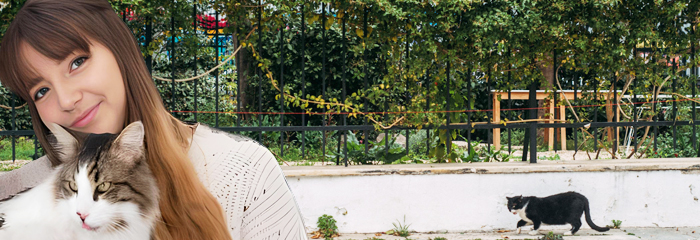


In this episode of Saaving the Streets, host Adelle welcomes April King, founder of Kotor Kitties, a groundbreaking TNVR program in Montenegro—the famed “City of Cats.” What began with a goal of sterilizing just 10 cats has grown into one of the region’s most impactful initiatives, transforming the lives of thousands of free-roaming cats. April shares her journey from community organizing in New York to spearheading spay/neuter and vaccination programs in the Balkans, overcoming cultural challenges, building partnerships with NGOs, and navigating the complexities of funding. This insightful conversation dives into the realities of TNR work abroad and the powerful ripple effects of determined individuals making change for animals and communities alike.
Listen to Episode #11 Now:
BIO:
April King
Although she still cherishes her first childhood toy — a Steiff cat — April thought she had permanently retired as a cat lady in the 1990s. Then she visited Kotor, met Danijela at her gift shop, Kotor’s Cats, and Luka, who needed a snip….. Suddenly her crazy background in anthropology, community organizing, non-profit management and cat rescue/spay-neuter/TNR activities made sense, as they merged to meet the needs of Kotor’s Kitties.
April and her husband, Michael, share their home in Seattle with rescued kitty Reilly O’Rourke, TNR’ed kitties Teddy and Nellie Caboodle (they failed the Return part!!), failed foster Bugsy Malone, and rescued dog Emma Louise. Their sons turned out to be fairly normal, but their daughter, Maggie, shows potential as a fine cat lady! April looks forward to retirement in Montenegro or Croatia.
Transcript:
Yassas, everybody. You know the drill. We've started this podcast to help anybody who's remotely interested in trapping and neutering animals.
We're the help we didn't receive when we first wanted to get involved, and we want to be your new friends in the TNR world. Today, you have me, your host, Adelle, and I'm here with April King. Thanks for joining us, April.
It's really nice to be here, Adelle, and to see you again. You too, you too. It's been a while.
So, a quick introduction. April is from an organization called Kotor Kitties. Kotor is a city in Montenegro.
Originally, April discovered the plight of free-roaming cats while living in New York. After learning how to TNR in multiple cities in the US, she took a trip to visit the city of Kotor in Montenegro, which is known as the City of Cats. However, she quickly learned there was no sterilization program in Kotor, or actually in Montenegro in general.
So, that's how Kotor Kitties was born. And while the original goal was sterilizing a modest 10 cats, Kotor Kitties' TNVR program has truly transformed the lives of free-roaming cats in this tiny Balkan country. Welcome, April.
Thanks for being here. And when we begin, we like to gently start our conversation by asking our guests a question of how did you start thinking about animal rights or animal rescue? I don't know that I did, but as a 10-year-old child, we had our first family cat who my parents didn't spay. And it made a huge impression on me.
That was 1964-65. And it was right about the time that Lady Bird Johnson was doing her Make America Beautiful and Don't Litter campaigns. And Nationally Humane Society and the ASPCA and others started picking up on the idea of don't litter.
And I just thought that was the cleverest thing. And my goal in life became to make sure cats got spayed and neutered, because living with the alternative was not a happy thing. And I really loved my cat and wanted her to be happy and healthy.
Yeah, that's a really good reason to get them neutered. Thank you for sharing that. So you started in the US, as we said, and you eventually made your way to Montenegro.
Could you ever have imagined you would be heading up one of the largest sterilization programs in this tiny little country of Montenegro? No, no. I learned how to trap in 1981, simply because the New York neighborhood where I was doing community organizing had lots and lots of cats living in basements and crawl spaces under the buildings. And it was very slow work to make friends sitting on the sidewalk with a dish of food.
It took me months to catch my first cat. And then I heard, oh, there's a way to do that with a trap. So I was off at that.
It was like, oh, boy, let's go. That's awesome. Yeah, it's really interesting, I think, to point out that a big point of learning about all of this was in New York, because I think I lived for quite a few years in and around New York, and I have never seen a cat there.
It just had not occurred to me that cats live. And ultimately, I wasn't looking for them, right, because they are everywhere. And they live in basements, as you said.
And there's huge spay and neuter efforts happening all across New York, all across the different boroughs. But I just wasn't looking. And I think a lot of people just don't see the sheer number of cats who are being fed in colonies, who are being spayed and neutered.
So that's quite cool. And for anybody who's unfamiliar with Montenegro, this is a little country in the Balkans. I had no idea where it was as well when I started my journey.
And I hadn't planned on ending up there. But April and I met when I spent two months in in Montenegro, and was just kind of starting out learning about spay and neuter and really wanting to get involved, but not really sure how I was kind of running around with a little plastic carrier thinking, how can I get these cats to go inside? And I found Kotor Kitties. And April and I spoke and I met the team and I realized they had this really cool program running and just didn't have enough people to do trapping.
You had all the equipment, you had the vets, you had all these processes set up and had been operating for quite a few years and doing thousands and thousands of sterilizations. And so I jumped in, did some trapping for two months, met April, learned about the island, learned about the vets. And yeah, it was a really, really cool experience.
It was one of my first larger scale spay and neuter experiences. So I'm really grateful for that. How often do you go to Montenegro and pick up a trap yourself these days? I try to go once or twice a year and stay for a couple of months at a time.
I was locked down there for six months during COVID. So I was able to do a lot of trapping then. The vets there did not close the way they did in the U.S. But because we are highly dependent on tourists for our funding, there were no tourists.
So our problem was not access to vets, it was lack of funding. So I've had, because of health problems, I had a year when I only had a three-week visit. And then, you know, like I say, I had six whole months during COVID.
So, but yeah, once or twice a year has been the goal. And now as my husband is reaching retirement, that's going to become less practical because, or less doable, simply because I self-fund my visits. And so our family income will be greatly reduced.
Yeah, definitely. I think there were quite a few instances I heard where people used COVID where there were less tourists to get a big jump on trapping because there was nobody to like interfere with trapping. But also, you weren't really supposed to be out on the street.
So you had to get special permission here in Greece to go out and trap and you couldn't be out past a certain time and this whole covert operation. That's really interesting. So speaking of funding, how did you guys make your way around that problem of not being able to rely on the tourist donations anymore? Did you switch strategies or did you just do less sterilizations during that time? Fewer sterilizations that year.
You can see a drop off and then a pick up again. So the goal starting out was to become tourist dependent, or largely tourist dependent, and to learn how to build relationships so that long after people had left Montenegro, they remembered how important it was to keep helping those cats. And we're not good at that.
That's, as far as I'm concerned, one of our huge failures. But I had an experience in nonprofits with grant writing. So we had like a five-year bridge of successful grant writing while we were supposedly gaining these skills of building relationships with tourists to take over when the grants had run their course.
So now we're struggling in that, oh, we haven't learned this, have we? We better get busy. Okay. And do you have any practical advice for anybody who is approaching this? Either they want to branch into more so grant writing to receive larger donations so they can sterilize more cats, or to take advantage of being in a tourism dominant area and connect with the local tourist community? I think diversifying is the best advice I can give.
So don't count on grant writing to sustain you long term, or to sustain the daily everyday spay neuter. Because it's an interest that sort of comes and goes with different funders, whether it's PetSmart and PetCo charities or other organizations, you just can't count on it. And for an American nonprofit like us that works in Europe, there's a lot of closed doors simply because we work outside the country, and they want to focus the funds here at home, where of course we do have a tremendous problem.
Not so much in the Seattle area where I live. That's where I learned my high volumes spay neuter lesson of how you can turn around the situation for animals in a few decades. But in the rest of the country, there are many places that have not, you know, have not reached that level yet.
I have no argument with them wanting to spend money here. But at the same time, European funders look at you and say, you're wealthy Americans, what do you need us for? So, you know, it's kind of a catch-22 situation. Yeah, definitely.
And I think especially when it comes to writing and applying for grants, there seems to be this perception that being a registered charity is a vital component of that. Would you say that was a big reason why you were eligible and receiving some of the grants that you did? Yes, definitely. I think so early on, we looked closely at could we have a relationship, contractual relationship, with a representative group rather than forming our own non-profit.
But within Montenegro, there were no other organizations that shared our focus. I mean, they're primarily dog-related to begin with, and there was just no interest in cats. They're primarily rescue-related, not spay-neuter, not TNBR.
So, just that wouldn't work. And then here in the U.S., they were very askance at sponsoring an organization that worked abroad. It just didn't fit with objectives here.
So, you know, okay, we'll be a 501c3. And then we're actually now a partnership of three groups of Coderkitties. So, we have the U.S. non-profit, which was the original, and then some of the volunteers from the U.K. formed a registered charity there, which allowed us to take advantage of the 25% gift aid from the government, which is really a nice thing.
And the goal all along was to start to involve the folks locally in decision-making and in running the organization. So, we have now an NGO equivalent in Montenegro. Cool.
Yeah, for anybody that doesn't know, this gift aid program is for U.K. charities, and as you said, can have a huge impact because you can get 25% of the original donation, of the taxes that are taken. The original donation from U.K. citizens, I guess it is, or taxpayers. Yeah.
So, that's a huge benefit. So, we're registered for England and Wales. Cool.
Okay. We were talking a little bit about this on our first episode, actually, when we were speaking about TNR versus TNVR and how a lot of times when we are applying for grants, there's always these rigid lists of things that you have to meet in order to be applicable and receive the grant, and sometimes it's charity registration. But a lot of times I've seen it's cost, right? So, these organizations want a really low cost and they just want it to go towards the sterilization and as high volume as possible.
One question we were discussing is how to approach, if we want to incorporate vaccinations into our sterilization protocol, how to approach that with funders and grants because, at least from the grant providers that I've seen, they don't really view vaccination as something they want to give to. They want to give to the sterilization surgery itself. Do you have any experience with that? Like, were you able to apply to include funding for vaccinations or you thought it was kind of excluded? Yes.
It's actually a very messy topic for us. So, when we first started out, it was just a group of Americans and Montenegrins, and our goal was to quickly show how high volume of space could affect things. And we purposefully did not include vaccine, but we wrote our mission statement so that that would be added when we felt like we had stable funding, we built enough numbers and stability in the program.
And that was set out at the beginning by Conscious Choice. And the problem was that we didn't really, the only word I can think of, because at my age I lose words a lot, is indoctrinate new volunteers. So, when the UK group started, they had no such cultural memory in their DNA and had no interest in funding vaccinations.
So, this was something that when we felt it was time, the American group took on a loan. So, it's become, it became quickly a messy sort of, oh dear, how are we going to split this up? And now we're solely responsible for the fundraising. And I'm not saying that the UK group is wrong in their attitude.
I'm saying we started from a different place and didn't share that, which is unfortunate. So, we started fundraising just off of a GoFundMe, and then I started writing it into grants where I could. And it's really, so we've successfully now had two tenders, they're called, sort of like grants, from the municipal government of Kotor.
And they're perfectly willing to pay for, they see the, having the tourists reassured that the cats are vaccinated to be a really good thing. So, they have no question about paying for that. Another German funder actually insisted that we had to provide rabies vaccine.
They wouldn't fund without it, which was interesting. Yeah, we haven't had anyone turn us down on including vaccines in a proposal. So, we do work directly with a distributor to get it for as low a cost as possible.
So, we started out with a goal of €5 for an FVRCP and €2 for rabies. We were a little bit over that for FVRCP and we're actually up to like 6.06 now for the infectious disease vaccine. And I think we're still at about 1.75 for rabies.
So, obviously, the more you buy at a time, the better. Our problem is that Montenegro gets a very limited supply of any vaccine. And so, we can go for months without having any available to purchase.
And then, oh, you can have 300 units. Well, if you're spaying 3,000 cats a year, that doesn't go very far. We also started with the thought that we would be vaccinating kittens that the people we work with were caring for as part of a foster program, that trying to protect their work would be the greatest benefit maybe we could do.
And what we found was that the vets were highly resistant to following the sort of shelter protocol that you would give in the U.S. that you would use for very high-risk kittens in situations where people are fostering 40 kittens. Hello, if that's not a shelter, what is? They're 40 kittens from the street with no known background, lots of diseases because there's just no immunization being done there, blah, blah, blah. So, when we realized that that wasn't going to work with kittens because the follow-up vaccine can start at four weeks, but if you're not doing follow-up vaccines, you know, you're wasting your money.
So, then we put them into the spay and neuter program and began doing as many as we could of our surgeries. And we had been keeping track all along of the fact that cats weren't being vaccinated. So, we had that in our record-keeping system.
And then when it started, we can track that, and we can see where we're out of vaccine and can't purchase anymore, which is really sad. There's a lot of really interesting points in there about your specific situation in Montenegro. And there are still people in Montenegro who do not believe in vaccination at all.
No COVID vaccine for them, no rabies for their pets, just no, no, no, no, no. So, that's an interesting sort of side issue that we've had to deal with. Definitely, definitely.
And like you've pointed out, getting people on board with sterilization and then also vaccination, I mean, this is an important point to the success of any spay and neuter project, right? Like, you want the public to accept you as an organization and the choices that you're making, even if they don't take care of those animals directly, but also the local people who are really involved. You want them to be on board and everybody providing the same type of medical care, especially if we're talking about vaccination, because like you said, if you're just doing one for a kitten and you're not doing the booster. Well, and if you're starting at four weeks, it's recommended that you do every two to three weeks thereafter until they're either 16 or 20 weeks old, just because you don't know when maternal immunity will run out if they received any maternal immunity.
And so many kittens are thrown out in Montenegro with umbilical cords attached. I've received pictures of them still wet from birth. So, you know, they haven't gotten that colostrum ingestion at the first, but, you know, if you vaccinate at four weeks and don't do those follow-ups, it's, you know, it's like a wasted vaccine.
So. Right. And the process of them.
And you can share the research with the vets, you can share the research with people, you can share all the recommendations. I mean, even the World Small Animal Vet Association came out this year recommending a sort of shelter schedule and, you know, it's still like, who are you to tell veterinarians how to do their job? So. Yeah.
So, to your point, this process of nursing from their mother is so important for them getting the antibodies that they need to fight off infectious disease, which is even more important when we consider, I think when we've spoken before, we've talked about how much infectious disease we see in the Balkans, in these countries, I mean, the respiratory and eye issues and all these, you know, things that everybody just calls cat flu. It's all these different types of infectious diseases that can be prevented, but they can also get them from their mother. And so, yeah, there's these interesting overlaps.
And I think it's important that you've pointed out that you're giving both rabies and infectious disease vaccines, because there are a lot of countries, especially around EU and UK that mandate rabies, just like you connected before with the funding, like German organizations, maybe they have lower rates of rabies. So, they're going to mandate that you're providing rabies vaccines, because they see it as a strategic approach. And then other countries in the Balkans have higher rates of rabies, right? So, they're going to understand that it is important to keep that herd immunity, even if rabies is not rampant in cats, just like we don't see rabies rampant in Greece, but we still want to vaccinate to provide that herd immunity.
But infectious disease, that's really the important one, isn't it? Because there's so many costs related to that spay and neuter programs incur because they're trying to treat all of these diseases that they get from birth, basically. What are some of the common conditions you see in Montenegro? And have you seen some difference in their health since introducing the vaccines? I can't say we're vaccinating at a level where we see differences in health, other than I have helped raise a couple litters of kittens where they were vaccinated starting at four weeks, even though they had their mother, we didn't know anything about her immunity. And none of them had any eye infections.
And I'm so proud now seeing them as adults that are going on three years old. It's like, oh, you're so beautiful and your eyes are so normal. And I know that having vaccinated them helped make that happen.
So, but can we look around? No, there are just tons of kittens with eyes popping out and bulging out and huge lesions and seals shut with pus and that's just everywhere. You do what you can. And don't let, I guess one of the biggest lessons is not to let perfection get in the way of making progress.
Because, you know, there are days when you stand back and go, I stand back and say, what are we doing here? There's just the high quality we aspire to is so far from being here. And yet we know we're changing lives. And this is the first trip.
I was there three months and just got back. And it's the first time that I haven't found a dead cat that I had to move out of the road, not a single dead cat. And I only found two dead dogs my first week hit by cars.
And for me, that was huge. Like I was afraid to say to people, oh my gosh, I can't believe this change. But it was quite astounding to me.
And assuming this is in huge part to all of the work that you guys and other groups have done all across Montenegro to stop this cycle, right? To stop the sickness before it happens, to stop the litters before they happen. And you've achieved that because you've done huge amounts of sterilizations and quite a few collaborations with, you know, local government, like getting funding for vaccines and other groups and locals and things like that. We're gonna talk about that a little bit more.
We're gonna take a quick break, and then we'll be right back speaking with April. Okay, we're back with April from Code to our Kitties. And let's get right back into our discussion.
So one thing I want to ask you is about all of these partnerships that you've done with different volunteers with different groups and all different cities across the country. Can you tell us a little bit about that? How Code to our Kitties has partnered with other organizations and got volunteers involved? I would say a lot of hesitation among the local NGOs when we first started, partly just that they were focused more on dogs and on rescue. So I will say I'm really grateful that NVO SPAS, SPAS, which is a take off on dogs, liked our idea of focusing on Spay-Neuter Awareness Month, one of the early Februaries when we were active.
And we did a collaborative project with them that actually sort of, I think, 14 other NVOs signed on to, to help sponsor. So for me, that was a huge win that we were suddenly on talking terms and collaborative terms with another group. And we differed.
We differ with many groups in terms of pediatric spays, in terms of TNR and sort of the idea of releasing a cat that hasn't been bandaged, collared, and held for seven to 10 days is still very controversial there. So we differed on pregnant spays. So we have so many areas of difference, but we were able to come together finally on one collaboration and lay aside all those differences.
We just want these animals spayed and neutered so the overpopulation starts to reduce. And that was wonderful. There are some collaborations.
Then we've had some expats. One with Tivat Tappies. Nicole Darcy lives there in Kotor now, and she's the founder of Tivat Tappies.
And she is really active in arranging spay-neuter and running cats around. She's a school teacher, so she does a cat day at school every year and raises funds for spay-neuter and for feeding. So that's been wonderful.
And then Karen Leong and Kenric Erickson are a couple of volunteers from the U.S., and they were about to start a spay-neuter program when Kotor Kitties started. So they initially started helping us, and then they formed their own group with their own funds called Spaying It Forward. They come to Montenegro probably once a year and work around Kotor Old Town where they've developed relationships with people.
And now they're working in Albania to address the problems sort of along the border of Montenegro and Albania. And Kenric still maintains our database for collecting the online spay information, which is wonderful. So that's sort of it.
And then the municipal government of Kotor, we approached pretty carefully after close to a year with just some facts about what we were doing, like we'd been flying under the radar till that point. But like, here's how much money we've invested. Here's how much tax dollars have come in through our spay-neuter program because we are paying the 21% tax on those surgeries.
And here are some ways you could help us. And we didn't ask them to build a shelter. We asked them for signage.
We asked them for help making tourists more aware of our program. And that actually went down well. They changed for the first time, they, I think it was 2022, changed their applications for NGO support to include animal welfare.
They had never done that. And specifically to include spay-neuter. Yeah, I thought so.
And the overall Montenegrin government at that point also put out tenders, they're called, that included spay-neuter of dogs instead of just support for feeding or support for a shelter improvement. It was specifically for spaying and neutering the dogs. It did not at first include cats.
And they are no way interested in talking about targeted spay-neuter because their goal is to make as many NGOs viable as possible. It's not really to change the population or change the animal welfare. But, you know, they've authorized those funds to be spent.
And then most recently, the Kotor Tourist Organization has started fundraising for the and using the money to pay for spay-neuter, pay for food. And last year, when a cat was shot with an air gun and paralyzed with an older cat within Old Town that had been known, you know, for many years, very popular cat, they immediately posted about it, made sure the vet bills were all covered. She did die within like four or five days.
And it was the first time they ever took a political statement on how wrong it was to abuse a cat that way. So that was a huge step because they had never wanted to be seen as promoting spay-neuter so openly or promoting even kindness. I mean, the basic message of kindness.
And here was this man lecturing the local population about this is not who we are as a people. Don't do that. So that was a nice thing to see.
And, you know, it's not just us. It's many, many tourists. It's many expats that are settling there.
The Russian influx has really helped promote animal welfare. So there are sort of a bunch of factors that came together all at once. And it's nice to see.
Yeah, those are all really inspirational points of the impact of this work and all of these different groups of people coming together and starting to see a little bit of human behavioral change in addition to the field work that we're doing on the ground. I think this idea you pointed out before of we have these different ideas of pregnant spay or how young to neuter a cat or even to introduce vaccines. But still, we all at least need to get them spayed and neutered to try to stop this constant cycle and have some kind of positive impact.
So still, let's come together. Whereas I think a lot of communities in animal rescue and welfare like fragment at those points. And they're like, okay, well, then I'm going to go do my own thing.
And we're not going to work together because I don't agree with you at all. And I think especially around the municipality, right? Like there's so much frustration around municipalities and what they should and shouldn't be doing and their standards of care and stuff like that. We talked a little bit about this on the last episode, how especially in Greece, like nobody wants anything to do with the municipality.